Beans & Origin
Where coffee actually comes from
A fruit seed grown at altitude in a narrow band around the equator, passed through several hands before it reaches a roaster.
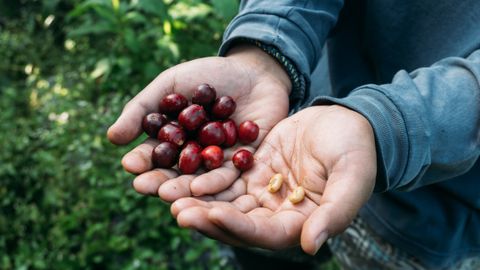
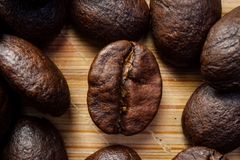
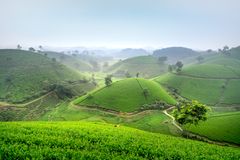
Coffee is the seed of a fruit, grown on a shrub, in a band roughly between the tropics of Cancer and Capricorn.
Everything about how it tastes starts there, long before anyone roasts it.
The plant
Two species account for essentially all commercial coffee.
Arabica makes up the majority of specialty coffee. It grows at higher altitudes, is more susceptible to disease and to temperature extremes, yields less, and produces a cup with more acidity, more aromatic complexity and less caffeine.
Robusta is hardier, grows at lower altitudes, resists disease better, yields more, and contains roughly twice the caffeine. The cup is heavier, more bitter, more rubbery and less aromatic.
Robusta has a poor reputation in specialty circles, partly deserved historically and increasingly less so. Well-grown, carefully processed robusta — sometimes labelled fine robusta — is a genuinely interesting thing, and it contributes body and crema in traditional Italian espresso blends.
Other species exist. Liberica and excelsa appear regionally, and there is renewed interest in species like eugenioides and in hybrids bred for climate resilience.
Varieties
Within arabica there are many varieties, and they matter to flavour the way grape varieties matter to wine.
Typica and Bourbon are the two historic lineages from which most others descend. Both are prized for cup quality and both yield relatively little.
Caturra, Catuai and Pacas are natural mutations selected for smaller size and higher yield.
Geisha, made famous by Panamanian producers, is known for intense floral and tea-like character and commands extraordinary prices.
SL28 and SL34, selections widely planted in Kenya, are associated with the blackcurrant character that region is known for.
Ethiopian landraces, frequently labelled simply as heirloom, represent enormous genetic diversity — Ethiopia is the species' origin and its wild diversity is unmatched anywhere.
Hybrids like Castillo and the Sarchimor and Catimor groups incorporate robusta genetics for disease resistance, particularly against coffee leaf rust. Cup quality varies and has improved substantially.
Altitude
Higher-grown arabica generally develops more slowly, which produces denser beans with more concentrated sugars and acids.
This is why bags list altitude, often as metres above sea level, and why higher figures generally correlate with brighter, more complex coffee.
Altitude interacts with latitude. A thousand metres near the equator is a different climate from a thousand metres further north or south, which is why absolute figures are only comparable within a region.
Harvest
Coffee cherries do not ripen simultaneously. On the same branch you will find green, yellow and deep red fruit.
Selective hand picking — returning to the same trees repeatedly, taking only ripe cherries — produces far better coffee and costs far more in labour.
Strip picking takes everything at once, including unripe and overripe fruit, which is faster and cheaper and produces a less consistent result.
Mechanical harvesting is used where terrain permits, mostly in Brazil.
Ripeness at picking is one of the largest determinants of cup quality, and it is entirely a question of how the harvest was organised and paid for.
The chain
From the tree, coffee passes through several hands.
The producer grows and picks it. It may be processed on the farm, or delivered to a central washing station or mill serving many smallholders.
It is dried, then rested as parchment coffee, then milled to remove the parchment layer, then sorted and graded.
An exporter handles documentation and shipping. An importer receives it and holds inventory. A roaster buys it, roasts it and sells it.
Each step affects quality and each takes a share of the price.
Who grows it
A large majority of the world's coffee is grown by smallholders, many farming just a few hectares.
Prices at the farm gate are frequently below production cost when the commodity market is low, and the volatility is severe.
This is the uncomfortable structural fact behind an inexpensive cup of coffee, and it is the reason direct trade and transparency initiatives exist.
The seasons
Coffee is a crop and it has a harvest.
Central American harvests generally run through the northern winter and arrive at roasters in spring. East African harvests are later. Brazilian harvest is mid-year. Indonesian and other southern hemisphere origins differ again.
Which means freshness is not only about the roast date. A coffee harvested eighteen months ago and roasted last week is a past-crop coffee, and it will taste flatter and woodier than a current-crop one.
Good roasters list harvest year. It is worth looking for.