Equipment
When your coffee suddenly gets worse
A routine that worked for months stops working, and the cause is usually one of a short list.
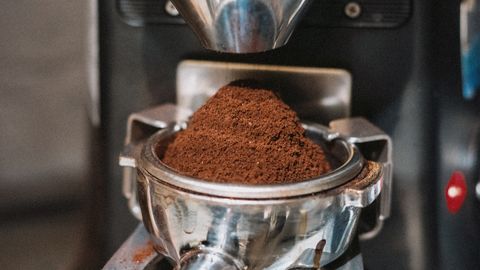
The scenario is familiar. Nothing changed, and the coffee is worse.
Something did change. Here is the list, in rough order of likelihood.
The coffee is older
Check the roast date first, always.
A bag that was excellent at day eight is different at day thirty-five. Aromatics fade, and the coffee becomes flatter.
Coffee also becomes more soluble as it degasses, which means the grind that was correct early can produce over-extraction later.
Fix: adjust grind coarser as a bag ages, and buy in quantities you finish within four weeks.
The equipment is dirty
The most common cause of a gradual decline that people never diagnose.
Coffee oils accumulate on grinder burrs, in brewers, on metal filters, in espresso group heads and baskets. They oxidise and go rancid.
The symptom is a stale, greasy, slightly bitter quality present regardless of which coffee you use.
Because it develops slowly, it is invisible — each cup is only slightly worse than the last.
Fix: clean everything properly. Brush and disassemble the grinder. Deep clean brewers with coffee cleaner. Backflush the espresso machine. Wash the French press filter assembly.
The improvement after a proper clean frequently surprises people.
Scale has built up
The other gradual decline.
Scale on a heating element insulates it, which lowers the water temperature reaching the coffee.
Lower temperature means under-extraction, which means sour, thin coffee — and because it develops over months, nobody connects it to the kettle.
Fix: descale the kettle and the machine. Then consider treating the water so it does not recur.
The water changed
Municipal water composition varies seasonally and by source.
A filter cartridge past its life stops working, which is effectively the same as changing water.
Fix: replace the filter cartridge on schedule rather than when the water tastes bad.
Test by brewing with bottled low-mineral water. If the difference is large, water is the problem.
The humidity changed
Particularly relevant for espresso.
Coffee absorbs moisture from the air, which affects both grinding behaviour and extraction.
A humid week can require a noticeably different grind setting from a dry one.
Fix: accept that the setting is not permanent and adjust by taste rather than by number.
Burrs have worn
Slow and inevitable.
Burrs dull over hundreds of kilograms of coffee. Dull burrs produce more fines and a wider particle distribution.
The symptom is that your usual setting behaves differently, brews run slower, and the coffee is simultaneously sour and bitter.
Fix: replace the burrs. This is a maintenance item rather than a failure.
Something in the machine has failed or drifted
Espresso machines in particular.
Gaskets harden and leak. Pressure drifts. Thermostats and temperature controllers drift. Pumps weaken.
The symptom is inconsistency more than a uniform decline.
Fix: replace the group gasket, check the pressure gauge, and have it serviced if the problem persists.
You changed something and forgot
More common than people admit.
A different filter brand with a different flow rate. A different water. A brewer replaced. A dose changed and not changed back. Someone else adjusted the grinder.
Fix: this is what the notebook is for. A record of your standard recipe tells you immediately whether the current setup matches it.
Your palate changed
Also real.
Illness, particularly anything affecting the nose, substantially changes perception.
Medication, smoking, and even a strongly flavoured meal beforehand all affect tasting.
And as your palate develops, coffee you previously enjoyed may genuinely stop satisfying you, which is progress rather than a fault.
The diagnostic order
Work through it systematically rather than adjusting variables randomly.
Check the roast date.
Clean the grinder and brewer thoroughly.
Descale the kettle or machine.
Replace the water filter, or test with bottled water.
Compare your current settings against your recorded standard recipe.
Brew a coffee you know well, from a fresh bag, at your standard recipe.
If that is still wrong, the equipment has changed — burrs, gaskets or machine.
The preventive version
Most of this is avoided by a maintenance schedule.
Weekly: brush the grinder, backflush, wash brewers.
Monthly: deep clean with coffee cleaner.
Quarterly: disassemble the grinder, descale, replace water filters.
Annually: check gaskets, consider burr condition.
Fifteen minutes a week prevents nearly every entry on the list above.
Also by Marcus Obeng
- What we would tell someone starting outEquipment
- A morning routine that produces good coffee every dayBrewing Methods
- Coffee grounds and wasteEquipment
- Recipe notebooks and dialling in systematicallyWater & Grind