Roasting
Cascara, cold foam and the edges of coffee
Byproducts, offshoots and drinks that use the coffee plant in ways the mainstream mostly ignores.
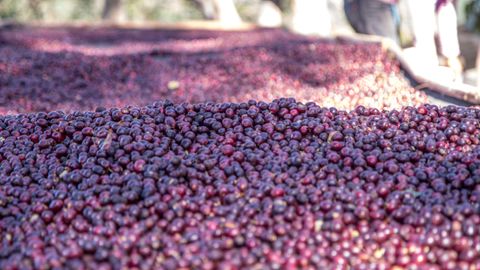
Coffee production discards most of the plant. The fruit, the leaves and the silverskin all have uses, some traditional and some newly commercialised.
Cascara
The dried skin and pulp of the coffee cherry, left after the seed is removed.
Traditionally used in Yemen, where it is called qishr and brewed with ginger and spices, and in Ethiopia and Bolivia in various forms.
What it tastes like. Not coffee. Hibiscus, rosehip, raisin, dried cherry, with a light body and a tart-sweet character.
Closer to a fruit infusion than to tea or coffee.
Caffeine. Present but modest — generally reported as substantially lower than brewed coffee, though figures vary considerably with preparation.
Brewing it. Roughly ten grams per five hundred millilitres, water just off the boil, steeped four to five minutes.
Also excellent cold brewed, and as an iced drink with lemon.
The regulatory oddity. Cascara occupied an ambiguous position in some jurisdictions as a novel food, since it had no history of consumption there.
Regulatory positions have been clarified in several markets, and it is now more widely available.
Why it matters. It uses a byproduct that is otherwise discarded or composted, creating an additional revenue stream for producers.
That said, drying cascara to food-grade standard requires care and infrastructure, so it is not free money.
Coffee leaf tea
Infusion made from dried coffee plant leaves, traditional in parts of Indonesia, Ethiopia and Jamaica.
Tastes vegetal and mild, somewhat like a light green tea, with low caffeine.
Contains mangiferin, a compound of research interest, though claims made about it outrun the evidence.
Commercially small and occasionally available.
Cascara syrup and other derivatives
Cascara reduced with sugar produces a syrup used in drinks, with a distinctive dried-fruit character.
Coffee flower, which blooms briefly and smells strongly of jasmine, has been used experimentally in infusions. Production is negligible since flowers become cherries.
Cold foam and modern café drinks
A category that has developed rapidly and is treated dismissively by traditionalists.
Cold foam is milk aerated cold rather than steamed, producing a thick foam that sits on top of an iced drink rather than dispersing.
Made with a high-speed frother, and typically using skimmed or low-fat milk, which foams more stiffly cold than whole milk.
Sweetened versions, and versions with added cream, are standard in commercial preparations.
It is genuinely a different texture from steamed milk and it works on iced coffee where hot foam would collapse.
Espresso tonic. Espresso over tonic water and ice.
The quinine bitterness and the carbonation with coffee's acidity produce something genuinely refreshing, and it works best with a bright fruity coffee.
Coffee and citrus. Espresso with orange, in various forms, has a long history in Mediterranean coffee culture and has been rediscovered.
Nitro coffee. Cold brew infused with nitrogen, producing a creamy cascading texture without dairy.
Coffee sodas and shrubs. Coffee with acidity and carbonation, appearing on specialty menus.
These are frequently dismissed as gimmicks. Several are coherent drinks that use coffee's properties deliberately, and the dismissal frequently says more about the dismisser than the drink.
Coffee cherry flour and food uses
Dried and milled coffee cherry has been developed as a flour ingredient, high in fibre and with a fruity character.
Used in baking and in bars. Commercially small and an interesting use of a waste stream.
Fermented and infused coffees
The experimental processing frontier, which is also an edge case.
Coffees fermented with specific yeast or bacterial cultures, co-fermented with fruit, or infused with flavours during processing.
These produce dramatic results and raise a genuine question: at what point does a processed coffee become a flavoured coffee?
Competition rules and industry bodies have engaged with this, and the boundary is contested.
The reasonable position is that transparency matters. A coffee co-fermented with fruit should say so, and then the drinker can decide.
What to try
Cascara is genuinely worth ordering once. It is inexpensive, distinctive, and uses something that would otherwise be discarded.
Espresso tonic takes two minutes and is a summer revelation for many people.
Cold foam is easy at home with a handheld frother and cold skimmed milk.
And coffee leaf tea, if you find it, is an interesting curiosity.
None of these will replace a good cup of coffee. All of them are more interesting than another debate about the correct water temperature.