Beans & Origin
Reading a coffee bag
What the label tells you, what it should tell you, and which terms are meaningful.
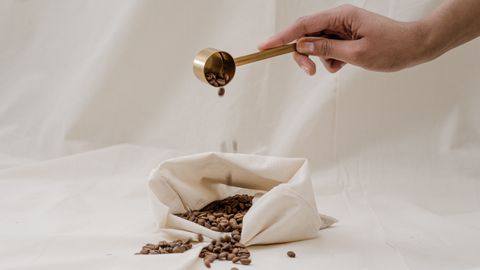
A good coffee bag contains enough information to know what you are buying. A bad one contains adjectives.
The essential item: roast date
Not a best-before date, which tells you nothing.
A roast date lets you judge freshness. Coffee is generally at its best somewhere between five days and five weeks after roasting, depending on the roast level and the brewing method.
A roaster who prints a roast date is telling you they expect the coffee to be drunk soon. A roaster who prints only a best-before date twelve months out is telling you something else.
This single item separates specialty roasters from commodity ones more reliably than anything else on the bag.
Origin information
Country is the minimum.
Region is more useful. Ethiopian coffee from Yirgacheffe differs substantially from Ethiopian coffee from Guji.
Producer, farm, cooperative or washing station is better still, and indicates a shorter and more transparent supply chain.
Altitude, usually in metres above sea level. Higher generally correlates with density and complexity, within a region.
Harvest year, which tells you whether this is current crop or something that has been sitting in a warehouse.
A coffee roasted last week from a harvest two years ago will taste flat and woody regardless of the roasting.
Variety
Bourbon, Caturra, SL28, Geisha, Castillo, or simply heirloom for Ethiopian landraces.
Varieties have characteristic profiles, and knowing them helps you predict what you will like.
Blends will list several or none.
Processing
Washed, natural, honey, anaerobic, or one of many experimental variations.
This is one of the strongest predictors of what the cup will taste like, and it is worth learning your own preference.
Tasting notes
The most decorative and least reliable part of the label.
Notes describe what the roaster tasted, using their own vocabulary, under their own brewing conditions.
They are genuine impressions rather than added ingredients — nothing has been flavoured. But they are subjective and frequently aspirational.
Useful as a broad steer: notes of citrus and floral suggest a bright washed coffee; chocolate and nuts suggest something darker and rounder; berry and tropical fruit suggest a natural.
Not useful as a specific promise.
Roast level
Listed as light, medium, dark or on a scale.
Unstandardised between roasters. One roaster's medium is another's light.
The intended brewing method is frequently more informative — a bag labelled for espresso is usually roasted differently from one labelled for filter.
The certifications
Worth knowing what each actually covers.
Fair Trade guarantees a minimum price to certified cooperatives plus a premium for community projects. It addresses price floors and is criticised for certification costs, for the fact that the premium goes to the cooperative rather than the individual farmer, and for not guaranteeing quality.
Organic certifies growing practices without synthetic inputs. It says nothing about quality or about what the farmer was paid. Certification is expensive, which means many smallholders farming organically by default are not certified.
Rainforest Alliance covers environmental and social criteria with a broader remit and a lower price guarantee than Fair Trade.
Bird Friendly certifies shade-grown coffee under specific canopy criteria. Demanding and genuinely meaningful ecologically.
Direct trade is not a certification. It is a claim by the roaster about their sourcing relationship. It can mean a genuine long-term relationship with published prices, or very little.
The meaningful version comes with specifics: who the producer is, what was paid, and how often the roaster has bought from them.
Price transparency
An increasing practice among serious roasters: publishing what was paid to the producer, per kilogram, alongside the commodity market price at the time.
This is the most informative sustainability signal available, because it is a number rather than a logo.
Roasters who do it tend to do it prominently.
What the packaging tells you
A one-way degassing valve indicates the roaster expects the coffee to be fresh enough to be releasing carbon dioxide.
A resealable closure is practical.
Clear windows look attractive and are bad for the coffee, since light degrades it.
Bag size matters. Buy what you will drink in three or four weeks rather than a large bag that will be stale by the end.
The summary
A bag with a roast date, a named region or producer, an altitude, a variety, a processing method and a harvest year is telling you the roaster knows and cares where the coffee came from.
A bag with a mountain photograph, the word smooth, and a best-before date is telling you something too.