Roasting
Small roasters, and how to find a good one
The most consequential coffee decision most people make, and the one with the least useful guidance available.
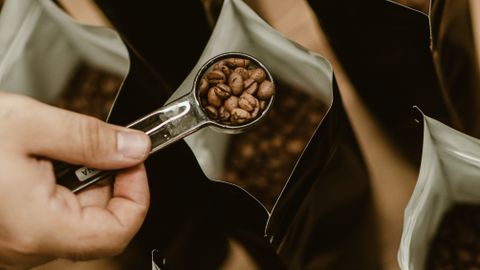
Where you buy coffee matters more than what you brew it with.
A good roaster sources carefully, roasts appropriately and ships fresh. Everything downstream depends on it.
The signals of a good roaster
Roast dates on every bag. Not best-before dates.
This is the single most reliable indicator, because it commits them to a supply chain fast enough that the date is not embarrassing.
Specific origin information. Region, producer or washing station, altitude, variety, processing method, harvest year.
A roaster who knows these things has bought coffee deliberately rather than accepting whatever an importer offered.
Changing offerings. Coffee is seasonal. A roaster whose single origin list is identical year-round is either blending to a profile or buying old crop.
Good roasters rotate as harvests arrive and are open about it.
Roasting for a purpose. Separate filter and espresso offerings, or clear guidance on what a coffee suits.
Honest tasting notes. Descriptive and plausible rather than fantastical. Notes of chocolate and citrus are believable; notes of thirty distinct fruits are marketing.
Price transparency, where offered. Publishing what was paid to producers is the strongest sustainability signal available.
Willingness to answer questions. Email and ask what they would recommend for a French press. A good roaster answers usefully.
The warning signs
Best-before dates only, particularly a year out.
Vague origin — a single country name and nothing else, or a blend with no components listed.
Every coffee roasted to the same level regardless of origin.
Heavy reliance on flavoured coffee, which is generally applied to lower-grade beans.
Marketing built around strength, boldness or caffeine content rather than around the coffee.
Oily beans in the bag when the roast is described as medium.
Local versus mail order
Local roasters offer the freshest possible coffee, a relationship, and frequently the chance to taste before buying.
Support them where they are good. Proximity does not guarantee quality, and some local roasters are careless.
Mail order opens the whole market. Well-regarded roasters ship promptly and coffee arrives within days.
Check whether they roast to order or ship from stock. Roasting to order adds a day or two and guarantees freshness.
Shipping time matters less than people fear — coffee in transit is fine, and a coffee roasted Monday and arriving Thursday is at a good point.
Subscriptions
Convenient, and worth choosing carefully.
Single roaster subscriptions deliver that roaster's rotating offerings. Good if you like them.
Curated multi-roaster subscriptions send different roasters each time. Excellent for discovering what you like and for finding roasters you would not have found.
What to check: frequency and quantity, since most subscriptions send more than people drink; whether you can pause and skip easily; whether you can specify grind or whole bean; and whether they ship immediately after roasting.
The most common subscription failure is accumulating coffee faster than you drink it, which defeats the purpose entirely.
How to evaluate one you have not tried
Buy one bag of a coffee whose profile you already know you like.
Brew it the way you normally brew, without adjusting anything else.
Then ask: is it fresh, is it clean, does it taste like the notes suggest, and does it taste better than what you were drinking before?
One bag tells you most of what you need. Do not commit to a subscription before that test.
Café coffee as a signal
If you have a good café locally, ask what they use.
Cafés serving carefully brewed filter coffee, offering a choice of origins, and staffed by people who can discuss what they are pouring, are generally buying from good roasters.
Many also sell retail bags, which is the simplest route to a good roaster you can taste before buying.
The uncomfortable economics
Good coffee costs more, and the reasons are real.
Selective picking costs labour. Careful processing costs infrastructure. Small lots cost more per kilogram to handle. Small-batch roasting is less efficient. Fresh shipping costs money.
A bag at three times the supermarket price is not a markup on the same product; it is a different product with a different supply chain.
Whether it is worth it is a personal judgement. What is not in question is that the difference is real and tastable.
Trying more than one
The most useful habit is buying from several roasters over a few months rather than settling immediately.
Roasters have house styles — some roast lighter, some develop more, some favour particular origins.
Finding the one whose approach matches your preference is worth a few bags of exploration, and once found it settles the question for years.
Also by Marcus Obeng
- What we would tell someone starting outEquipment
- When your coffee suddenly gets worseEquipment
- A morning routine that produces good coffee every dayBrewing Methods
- Coffee grounds and wasteEquipment