Beans & Origin
Robusta, reconsidered
A species dismissed by specialty coffee for decades, with a case for reconsideration that is partly about quality and partly about climate.
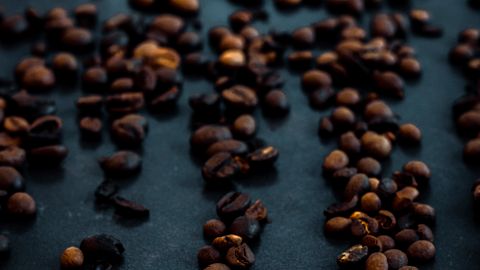
Coffea canephora, sold as robusta, accounts for a substantial share of world production and almost none of specialty coffee's attention.
That is changing, for reasons worth understanding.
How it differs from arabica
Genetics. Robusta is diploid; arabica is tetraploid and is itself descended from a hybridisation involving canephora.
Growing conditions. Robusta tolerates lower altitudes, higher temperatures and more variable rainfall. It resists coffee leaf rust and several pests that devastate arabica.
Yield. Substantially higher per hectare.
Chemistry. Roughly twice the caffeine. Higher chlorogenic acid content, which contributes bitterness. Lower lipid and sugar content, which reduces sweetness and aromatic complexity.
Cup. Heavier body, more bitterness, lower acidity, and at commodity grade a characteristic rubbery or woody quality.
Why it has a poor reputation
Partly deserved and partly circumstantial.
The species does have less aromatic complexity than arabica. That is genuine.
The larger factor is that robusta has overwhelmingly been grown as a commodity crop, strip picked, processed carelessly, dried on the ground, and sold on volume rather than quality.
Almost nobody was trying to grow good robusta, so almost nobody had tasted good robusta.
Comparing carefully produced specialty arabica with mass-produced commodity robusta and concluding the species is inferior confounds two variables.
Fine robusta
A grading protocol now exists specifically for robusta, with its own cupping standards and descriptors, recognising that it should not be judged on an arabica scale.
Well-grown, selectively picked, carefully processed robusta produces something genuinely different from commodity robusta: chocolate, nut, spice, tobacco and a heavy syrupy body, with the bitterness controlled rather than dominant.
Producers in India, Uganda, Vietnam, Brazil, Indonesia and elsewhere are producing fine robusta deliberately, and it is beginning to appear in specialty channels.
The espresso case
Where robusta has always had defenders.
Traditional Italian espresso blends frequently include robusta, typically ten to thirty percent, for specific reasons.
It produces more crema, and a more persistent one, due to its composition.
It contributes body and a bittersweet depth that stands up to milk.
And it adds consistency, since robusta is less variable than arabica.
A traditional Neapolitan espresso with substantial robusta is a coherent and excellent drink, and judging it by the standards of a light-roast single origin Ethiopian misses the point entirely.
The climate argument
The reason this is not merely an aesthetic debate.
Arabica requires a fairly narrow temperature band. Modelling consistently projects substantial reductions in suitable arabica land over coming decades as temperatures rise.
Robusta tolerates warmer conditions, though it is not immune — research indicates its optimal range is also narrower than previously assumed, and it too faces pressure.
Which means the coffee supply of the coming decades will likely include a larger proportion of robusta, whether or not specialty coffee approves.
Improving robusta quality is therefore a practical necessity rather than a curiosity.
Other species
Attention is also turning to species beyond the two commercial ones.
Coffea liberica and its variety excelsa, grown regionally in West Africa and Southeast Asia, tolerate heat and produce a distinctive, divisive cup — jackfruit, smoke, and an unusual profile.
Coffea stenophylla, rediscovered growing wild in West Africa after being considered lost, has attracted attention for tolerating substantially higher temperatures while reportedly cupping comparably to arabica.
Coffea eugenioides, one of arabica's parent species, produces very low caffeine coffee with intense sweetness and has appeared in competitions at extraordinary prices.
These are early and they represent genuine genetic options rather than novelties.
How to try good robusta
Look for fine robusta specifically, from roasters who describe it deliberately rather than hiding it in a blend.
Indian robusta, particularly from Karnataka, has a good reputation. Ugandan and Vietnamese fine robusta is increasingly available.
Brew it as espresso, or as a strong immersion. Traditional preparations — Vietnamese phin with condensed milk, Italian espresso — are built around it and show it well.
Approach it expecting body, bittersweet depth and low acidity, rather than expecting it to behave like an arabica.
The reasonable position
Arabica at its best is more complex and more aromatic than robusta at its best. That is true and unlikely to change.
Robusta at its best is considerably better than most people believe, has a genuine role in espresso, and is going to matter more as the climate shifts.
Dismissing an entire species based on the worst examples of it is not a defensible position in any other agricultural product, and it is not one here either.
Also by Diego Ferrant
- Buying a grinder at every budgetEquipment
- Common myths, correctedWater & Grind
- Coffee in cookingBeans & Origin
- Setting up a small home coffee barEquipment