Roasting
What roasters actually do all day
Sourcing, sample roasting, production, quality control and a great deal of logistics, of which the actual roasting is a small part.
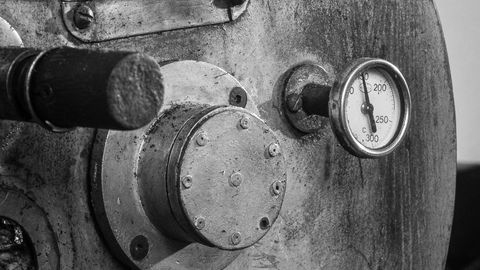
People imagine roasting as the job. For a working roaster it is perhaps a fifth of the work.
Sourcing
The decisions that determine everything downstream.
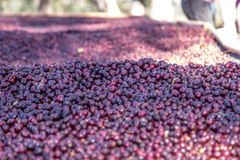
Importers send samples — small quantities of green coffee from available lots — throughout the year as harvests arrive.
The roaster sample roasts each on a small machine, then cups them, frequently blind, scoring and comparing.
A roaster may cup dozens of samples to select a handful.
Then they negotiate quantity and price, considering how much they can sell before it ages, cash flow, and how it fits the existing lineup.
Larger roasters travel to origin, visit farms, build direct relationships and buy at the source. This is expensive and slow and produces the relationships that transparency reports describe.
Sample roasting and profile development
Once a coffee is purchased, the profile must be developed on the production machine.
A profile that worked on a sample roaster does not transfer directly to a larger drum.
This means several test batches, cupped and compared, adjusting charge temperature, heat application, airflow and drop point until the coffee is showing what the roaster wants.
For a coffee sold as both filter and espresso, two profiles.
Each test batch costs green coffee and time.
Production roasting
The visible part.
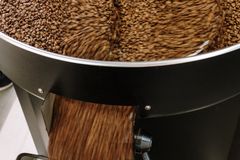
A production day involves back-to-back batches, with the machine's thermal state changing between them — the first batch of the day behaves differently from the tenth.
Roasters compensate with adjusted charge temperatures and warm-up routines.
Modern roasters use profiling software logging bean temperature, environmental temperature and rate of rise, with the target profile overlaid so deviations are visible in real time.
Every batch is logged. Consistency is the goal, and the roast is guided rather than automated.
Quality control
Continuous.
Cupping production batches against reference samples to confirm consistency.
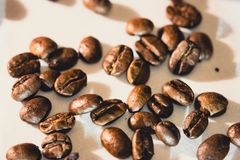
Checking colour with a colorimeter, which measures roast degree objectively.
Checking moisture and density of incoming green coffee.
Tracking how coffees change as they rest, and as green coffee ages over months in storage — a coffee bought in March may need profile adjustment by September as its moisture content shifts.
Blending
For roasters offering blends, an ongoing task.
Components run out. Harvests change. A blend must be reformulated to maintain its profile, which means test blends, cupping and adjustment.
Some roasters roast components separately then blend; others blend green and roast together. Both approaches have adherents, and separate roasting allows each component its own profile at the cost of more work.
Packaging and logistics
Unglamorous and substantial.
Weighing, sealing, labelling, applying roast dates.
Managing green coffee inventory, which requires storage, capital and forecasting.
Fulfilling orders, managing subscriptions, dealing with shipping.
Wholesale accounts, which require delivery schedules and consistency.
Wholesale support
Roasters supplying cafés typically also provide training, equipment support and dialling-in assistance.
A wholesale customer producing bad espresso from your coffee is a reputational problem, so roasters invest in making sure their accounts can use the product.
Machine maintenance
Drum roasters require regular attention.
Chaff collection systems must be emptied and cleaned — chaff is flammable and roaster fires are a real hazard.
Exhaust systems accumulate residue and require cleaning.
Bearings, seals and burners need servicing.
Neglect produces both fire risk and inconsistent roasting.
The economics
Worth understanding, because it explains pricing.
Green coffee is the largest input cost, and for specialty lots substantially higher than commodity.
Weight loss during roasting is fourteen to twenty percent, so a kilogram of green produces around eight hundred grams of roasted. Green cost per roasted kilogram is therefore higher than the green price suggests.
Then labour, energy, packaging, rent, equipment depreciation, shipping, marketing and distribution margin.
Small-batch roasting is less efficient than industrial roasting on every one of these.
Which is why specialty coffee costs several times supermarket coffee, and why the margin on it is frequently thinner than people assume.
What distinguishes a good roaster
Not equipment. Most competent roasters use similar machines.
Sourcing judgement — buying good coffee consistently.
Profile development — knowing what a coffee wants rather than applying a house profile to everything.
Quality control — cupping regularly and catching problems.
Consistency — the same coffee tasting the same across batches.
And honesty about what they are selling, which shows up in labels that say where coffee came from, when it was roasted, and what was paid.
Also by Diego Ferrant
- Buying a grinder at every budgetEquipment
- Common myths, correctedWater & Grind
- Coffee in cookingBeans & Origin
- Setting up a small home coffee barEquipment