Roasting
Decaffeination: how it is done and what it costs the cup
Four main processes, meaningfully different results, and decaf has improved enormously from its reputation.
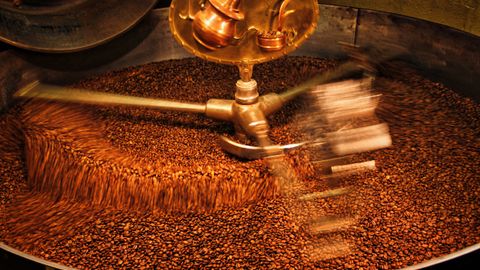
Decaffeinated coffee has a poor reputation earned decades ago and largely undeserved now.
The process removes caffeine from green coffee before roasting, and how it is done affects how much else goes with it.
The general principle
Caffeine is soluble. Every method involves getting it out of the bean using water, a solvent, or carbon dioxide, then drying the bean and returning it to the supply chain.
The difficulty is that caffeine is not the only soluble compound. Removing it without removing everything else is the entire challenge.
Regulations in most markets require decaf to have at least ninety-seven percent of its caffeine removed. Decaf is not caffeine-free — a cup typically contains a small residual amount.
Solvent-based methods
The most common commercially.
Green beans are steamed or soaked, then treated with a solvent that selectively binds caffeine. The solvent is then removed and the beans dried.
Direct method: the solvent contacts the beans directly.
Indirect method: beans are soaked in water, the water is treated with solvent, and the beans are returned to the water so that other soluble compounds are reabsorbed.
The solvents used are methylene chloride and ethyl acetate.
Methylene chloride is efficient and selective. Residual levels in finished coffee are strictly regulated and are extremely low, and further reduced by roasting, which occurs well above the solvent's boiling point.
Regulatory bodies have considered it safe at the levels involved, and it has periodically attracted scrutiny. Some consumers prefer to avoid it on principle.
Ethyl acetate occurs naturally in fruit, which is why coffee decaffeinated with it is sometimes labelled naturally decaffeinated or sugarcane process — the ethyl acetate is frequently derived from fermented sugarcane, particularly in Colombia.
Sugarcane process decaf has a good reputation for retaining sweetness and body.
Swiss Water Process
A solvent-free method, and the best known by name.
Green coffee is soaked in water, which removes caffeine along with everything else soluble. That water is passed through activated carbon filters sized to capture caffeine molecules while allowing flavour compounds through.
The resulting caffeine-free but flavour-saturated water — green coffee extract — is then used to soak subsequent batches. Because it is already saturated with flavour compounds, only caffeine migrates out of the new beans.
Elegant, chemical-free, and it produces good results. It is also more expensive, which is reflected in the price.
A related process, sometimes called mountain water process, works on similar principles.
Carbon dioxide process
Carbon dioxide under high pressure becomes supercritical — behaving as both liquid and gas — and in that state selectively dissolves caffeine.
The caffeine-laden carbon dioxide is then separated and the beans dried.
Highly selective, chemical-free, and expensive due to the equipment required. Used substantially for commercial-scale decaf.
What decaffeination costs the cup
All methods affect the bean.
The bean structure changes, becoming more brittle and more porous, which affects both roasting and grinding.
Some flavour compounds are lost regardless of method.
Decaf green coffee is darker before roasting, which makes colour-based roast judgement unreliable and is one reason decaf was historically over-roasted.
Decaf also roasts faster and stales faster.
Which means a substantial part of decaf's poor reputation came from roasters treating it as an afterthought, using poor green coffee and roasting it dark to cover flaws.
Why it is much better now
Specialty roasters now buy good green coffee for decaffeination rather than the worst lots, and roast it deliberately with adjusted profiles.
Processing has improved. Sugarcane and Swiss Water decafs from good origins can be genuinely excellent.
The gap between a good decaf and a good regular coffee is now noticeable rather than enormous.
Buying it
Look for the same information as any coffee: roast date, origin, altitude, processing.
Look for the decaffeination method, which good roasters state.
Buy small quantities, since decaf stales faster.
Expect to pay more, since decaffeination adds cost.
Brewing it
Decaf is more porous and extracts faster, so it frequently needs a slightly coarser grind than you would use for the same origin caffeinated.
It is also less forgiving of over-extraction.
For espresso, decaf typically requires adjustment and behaves differently as it ages.
The half-caf option
Blending decaf and regular in the same brew is a legitimate approach for people reducing intake without giving it up.
It works fine, and grinding them together is easier than brewing separately.
Also by Diego Ferrant
- Buying a grinder at every budgetEquipment
- Common myths, correctedWater & Grind
- Coffee in cookingBeans & Origin
- Setting up a small home coffee barEquipment