Tea
Tea processing and the six categories
One plant, six broad styles, separated almost entirely by what happens to the leaf after picking.
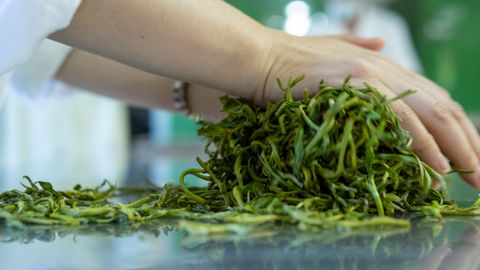
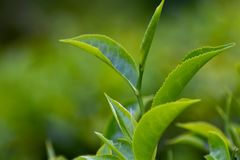
Green tea, black tea, white tea and oolong all come from the same species, Camellia sinensis.
The differences come from processing, principally from how much the leaf is allowed to oxidise.
Oxidation, not fermentation
Worth correcting a persistent misuse of terms.
When a tea leaf is bruised or broken, enzymes react with oxygen and the leaf browns — the same process that turns a cut apple brown.
This is oxidation, an enzymatic reaction, not fermentation, which involves microbial activity.
Only one category, dark tea, involves genuine microbial fermentation.
The industry uses both terms loosely, and understanding the distinction clarifies why the categories work as they do.
The six categories
Green tea. Oxidation is halted almost immediately after picking, by heat.
Chinese green teas are typically pan-fired, producing nutty, toasty, sometimes chestnut character.
Japanese green teas are typically steamed, producing a greener, more marine, umami-rich character — the difference between a Longjing and a Sencha is largely this.
The leaf is then rolled and dried.
White tea. The least processed. Leaves and buds are withered and dried, with minimal handling.
Some light oxidation occurs naturally during the long wither, so white tea is not strictly unoxidised.
Delicate, subtle, honeyed, floral. Silver Needle uses only buds; Bai Mu Dan includes leaves.
Yellow tea. Rare. Similar to green tea with an additional slow smothering step where the warm damp leaves are wrapped, producing a gentler, less grassy character.
Production is small and much of what is sold as yellow tea is not.
Oolong. Partially oxidised, anywhere from around ten percent to eighty percent, which makes it the broadest and most varied category.
The leaves are withered, then bruised repeatedly — traditionally by shaking or tumbling — to initiate oxidation at the edges, then fired to stop it.
Lightly oxidised oolongs are floral, creamy and green. Heavily oxidised and roasted ones are dark, woody, stone-fruited and honeyed.
Taiwanese high mountain oolongs and Wuyi rock teas sit at opposite ends of this range.
Black tea, called red tea in China.
Fully oxidised. Withered, rolled or cut to break cell walls, oxidised until dark, then dried.
Malty, brisk, robust. Assam, Ceylon, Keemun, Dian Hong.
Dark tea, including pu-erh.
The only genuinely fermented category, involving microbial action over time.
Sheng, or raw pu-erh, is processed like green tea then aged slowly over years or decades, developing complexity gradually.
Shou, or ripe pu-erh, undergoes an accelerated wet piling fermentation developed in the 1970s, producing earthy, smooth, sweet character in months rather than decades.
Why processing produces these differences
Oxidation converts catechins — the compounds responsible for green tea's astringency and vegetal character — into theaflavins and thearubigins, which give black tea its colour, body and malty depth.
Heat applied early, whether by steaming or pan-firing, denatures the enzymes and stops the process.
Which is why the timing and intensity of that heat step is the single largest fork in tea production.
What is not tea
Herbal infusions — chamomile, peppermint, rooibos, hibiscus — are not tea. They contain no Camellia sinensis and no caffeine, with a few exceptions like yerba mate and guayusa which come from other caffeinated plants.
The word tisane is more accurate, though nobody uses it.
Where terroir comes in
Beyond processing, tea reflects its origin.
Altitude, climate, soil, cultivar and season all matter.
Spring harvests are generally the most prized in green tea and in Darjeeling, where first flush teas command premium prices for their delicacy.
Cultivars matter as they do in coffee, and Japanese tea in particular is frequently sold by cultivar.
Where to start
If you want to understand the categories, buy small quantities of a Chinese green, a Taiwanese oolong, a Chinese black and a shou pu-erh, and drink each for several days.
The differences are obvious once tasted side by side, and much clearer than any description.
Then narrow into whichever category interested you most. Each one contains a lifetime of variation.