Brewing Methods
Turkish coffee and other traditions
Brewing methods that predate every piece of equipment discussed elsewhere on this site, and are still the everyday method for millions.
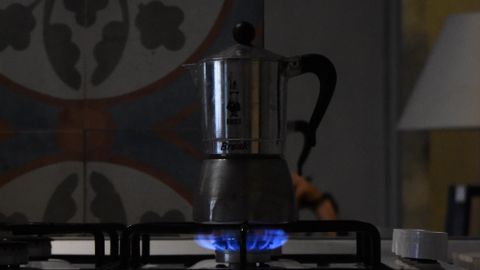
Most coffee writing assumes a filter, a pump or a plunger. For much of the world, coffee is made by boiling very fine grounds in water and drinking the result.
Turkish coffee
Known by many names across a wide region — Turkish, Greek, Arabic, Armenian, Bosnian — with local variations and considerable sensitivity about the naming.
The method is broadly consistent.
The grind is extraordinarily fine, finer than espresso, closer to flour. This is not achievable on most home grinders; a dedicated Turkish mill or a purchased pre-ground coffee is usually necessary.
The vessel is a small long-handled pot, called a cezve or ibrik, traditionally copper.
The method. Cold water, coffee and sugar if desired, combined in the pot. Roughly one heaped teaspoon of coffee per small cup.
Stir to combine, then place on low heat.
Do not stir again once it begins heating.
As it heats, a foam rises. Just before it boils over, remove from the heat and let it settle.
Traditionally this is repeated two or three times.
Pour into small cups, distributing the foam — which is considered the mark of a well-made coffee — evenly among them.
Let it settle for a minute before drinking, and do not drink the sludge at the bottom.
Sugar is added at the start, not afterward, and the level is specified when ordering: without sugar, a little, medium, or sweet.
The grounds remaining in the cup are used for fortune telling in several of these cultures, which is a genuine social practice rather than a novelty.
Ethiopian jebena
Green beans roasted in a pan over coals immediately before brewing, ground by hand, then boiled in a round-bottomed clay pot called a jebena.
The pot is boiled, allowed to settle, and poured from a height into small handleless cups.
Served in three rounds, each progressively weaker, with the third considered a blessing.
The whole process takes an hour or more and is an act of hospitality rather than a beverage service.
Vietnamese phin
A small metal filter that sits on top of the cup.
Coarsely ground coffee — traditionally robusta, dark roasted, sometimes with butter or oil in the roast — is placed in the chamber, a perforated press is set on top, and hot water is added.
It drips slowly, taking four or five minutes, producing a strong concentrated brew.
Traditionally served over sweetened condensed milk, either hot or poured over ice as cà phê sữa đá.
The condensed milk is not a compromise. It is the point — the combination of intensely bitter robusta and heavy sweetness is a coherent and excellent drink.
Egg coffee, from Hanoi, whisks egg yolk with condensed milk into a thick foam poured over the coffee.
Indian filter coffee
South Indian filter coffee uses a two-chamber stainless steel device.
Finely ground coffee, frequently blended with chicory, is packed in the upper chamber and hot water added. It drips slowly into the lower chamber over several hours, producing a strong decoction.
The decoction is mixed with hot milk and sugar, then poured repeatedly between a tumbler and a wide bowl from a height — which cools it, aerates it, and produces a froth.
The pouring is theatrical and functional.
Scandinavian kokkaffe
Coarse coffee boiled in a pot, sometimes with an egg added to clarify it — the egg proteins bind fine particles and settle them.
Egg coffee is still made at gatherings in parts of Scandinavia and the American Midwest, and it produces a remarkably clear and gentle cup.
Café de olla
Mexican coffee brewed in a clay pot with piloncillo — unrefined cane sugar — and cinnamon, sometimes with orange peel or cloves.
Boiled together and strained. Sweet, spiced and quite unlike anything in the specialty canon.
What these methods share
None of them use paper. Most involve boiling. Several are inseparable from a social ritual rather than being a quick beverage.
And several use robusta or dark roasts that specialty coffee tends to dismiss, in preparations where those characteristics are exactly right.
Why they are worth trying
Beyond the obvious cultural interest, they demonstrate that the parameters treated as fixed in specialty coffee are conventions rather than laws.
Boiling coffee is supposed to be wrong. Turkish coffee boils it and is delicious.
Robusta is supposed to be inferior. Vietnamese coffee is built on it and is excellent.
Adding sweetened condensed milk to coffee is supposed to be a compromise. It is one of the better coffee drinks in existence.
A cezve costs very little and takes ten minutes to learn. It is the cheapest way to substantially widen what you think coffee can be.
Also by Diego Ferrant
- Buying a grinder at every budgetEquipment
- Common myths, correctedWater & Grind
- Coffee in cookingBeans & Origin
- Setting up a small home coffee barEquipment