Brewing Methods
Instant coffee, honestly assessed
A product with a poor reputation, a genuine technical basis for that reputation, and a specialty version that changes the argument.
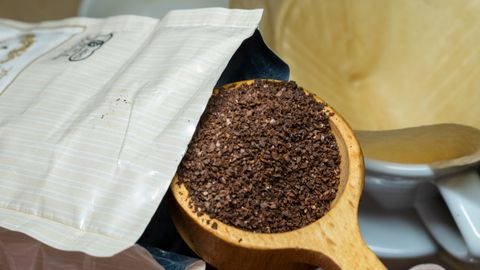
Instant coffee is brewed coffee with the water removed, leaving soluble solids that dissolve again when water is added.
Most of it is poor. Some of it is genuinely good, and the difference is worth understanding.
How it is made
Coffee is brewed at industrial scale, at high concentration, then dried by one of two methods.
Spray drying. Concentrated coffee is sprayed as a fine mist into hot air, and the water evaporates almost instantly, leaving powder.
Fast and cheap. The high temperature drives off a substantial proportion of volatile aromatic compounds, which is the main reason spray-dried instant tastes flat.
Freeze drying. Concentrated coffee is frozen, then placed under vacuum where the ice sublimates directly to vapour without passing through a liquid phase.
Slower and considerably more expensive. Because it happens at low temperature, far more aromatic compounds survive.
Freeze-dried instant is noticeably better than spray-dried, and the process is what most specialty instant uses.
Why most instant is bad
Several compounding factors.
The green coffee. Commodity instant is made from the cheapest available coffee, frequently low-grade robusta.
The roast. Typically dark, to produce consistent extraction at industrial scale and to mask defects.
The extraction. Industrial extraction pushes yields far beyond what is done in brewing, extracting bitter compounds deliberately to maximise soluble yield per kilogram of coffee.
The drying. Spray drying at high temperature removes aromatics.
Storage. Instant is hygroscopic and stales, particularly once opened.
Each factor compounds. The result is a product optimised for cost and shelf life rather than for flavour.
The specialty version
A genuinely different product that has emerged over the past decade.
Good green coffee, roasted appropriately, brewed rather than industrially extracted at high yield, and freeze dried carefully.
Frequently sold in single-serve sachets, and priced far above supermarket instant — sometimes comparable per cup to fresh coffee.
It is not equal to a well-brewed fresh cup. It is markedly better than commodity instant, retains recognisable origin character, and is genuinely pleasant.
For contexts where brewing is impossible, it is the correct answer.
Where it makes sense
Travel, particularly hiking, camping and flying.
Offices with no facilities.
Hotels with only a kettle.
Cooking and baking, where a concentrated coffee flavour is wanted without adding liquid. Instant is genuinely the right ingredient here — in tiramisu, in chocolate baking, in rubs.
Emergency supply at the back of a cupboard, since it keeps far longer than beans.
Making it as well as possible
Small adjustments improve the result noticeably.
Use less water than the packet suggests, or more coffee. Most instructions produce something weak.
Do not use boiling water. Around eighty to ninety degrees is better; boiling water accentuates the harshness.
Dissolve in a small amount of water first, stirring into a paste, then add the rest. This disperses it properly.
Store it airtight, since it absorbs moisture rapidly and clumps.
Buy small jars and use them promptly.
The other convenience formats
Drip bags. Single-serve filters pre-filled with ground coffee, hanging on the cup rim.
Genuinely good if the coffee inside is good and recently packed, because it is real brewed coffee rather than reconstituted.
The limitation is that the coffee is pre-ground and staling from the moment of packing, though nitrogen flushing helps.
Widely available in East Asia and increasingly elsewhere, and several specialty roasters make them.
Steeped coffee bags, like tea bags. Convenient, generally poor, because the fine grind stales fast and the extraction is limited.
Capsules. Pre-portioned ground coffee in sealed pods, brewed under pressure.
The sealing genuinely preserves freshness, and the coffee quality varies enormously by brand.
Convenience is the product. Environmental concerns around single-use pods are real, with recycling and compostable options varying in practicality.
Refillable capsules exist and let you use your own coffee, at the cost of the convenience that was the point.
Coffee concentrate, liquid, refrigerated, diluted at serving. Frequently cold brew based, and reasonably good.
The reasonable position
Instant coffee is not fresh coffee and does not pretend to be.
Commodity instant is a low-quality product for a low price, which is an honest transaction.
Specialty instant is a genuinely improved product at a genuinely higher price, appropriate for specific situations.
And a great many people drink instant every day and enjoy it, which is entirely their business. Coffee snobbery about this achieves nothing except making people defensive about what they drink.
If you want them to try something else, make them a good cup rather than criticising theirs.
Also by Marcus Obeng
- What we would tell someone starting outEquipment
- When your coffee suddenly gets worseEquipment
- A morning routine that produces good coffee every dayBrewing Methods
- Coffee grounds and wasteEquipment