Tea
Brewing tea without ruining it
Temperature and time, mostly — and boiling water on green tea is why so many people think they dislike green tea.
Tea is more forgiving than coffee in some ways and less in others. The main way it goes wrong is water that is too hot for the leaf.
Temperature by category
Approximate, and worth treating as starting points.
Green tea: seventy to eighty degrees Celsius. Japanese sencha lower, around seventy; gyokuro lower still, around sixty.
White tea: seventy-five to eighty-five.
Yellow tea: around seventy-five to eighty.
Oolong: eighty-five to ninety-five, with lighter oolongs at the lower end and roasted ones near boiling.
Black tea: ninety to one hundred.
Pu-erh and dark tea: boiling.
Herbal infusions: boiling.
The reason green tea needs cooler water is that its catechins extract rapidly at high temperature, producing bitterness and astringency that overwhelm everything else.
If you have decided you dislike green tea, brew a decent sencha at seventy degrees for a minute and reconsider.
Getting the temperature without a thermometer
Boil, then wait. Roughly, water drops about ten degrees in the first minute or two after boiling in an open vessel, less thereafter.
Pouring boiling water into a cool cup and then into the pot drops it several degrees.
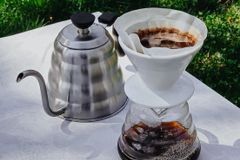
A variable temperature kettle removes the guesswork and is one of the few pieces of equipment genuinely worth buying for tea.
Time
Also approximate, and dependent on leaf quantity.
Green: one to two minutes.
White: two to five minutes.
Oolong: two to three minutes Western style, far shorter in a gongfu approach.
Black: three to four minutes.
Pu-erh: shorter than you would expect, particularly ripe pu-erh, which can become muddy.
The single most common error after temperature is leaving the leaf in the cup indefinitely. Remove it.
Leaf quantity
Western style: roughly two to three grams per two hundred millilitres.
Most people use too little, then compensate by steeping longer, which extracts bitterness rather than flavour.
More leaf and less time is almost always better than less leaf and more time.
Gongfu brewing
The Chinese approach, and worth understanding even if you brew Western style most of the time.
A high leaf-to-water ratio — five or more grams in a hundred millilitre vessel — with very short steeps of ten to thirty seconds, repeated many times.
Each infusion tastes different. The tea opens up, peaks, and gradually fades over anywhere from five to fifteen steeps.
It requires a small pot or gaiwan and a bit of attention, and it extracts far more from a good leaf than a single long steep does.
For oolong and pu-erh especially, this is how the tea is meant to be drunk.
Water
Matters as much as it does for coffee.
Very hard water flattens delicate teas and can produce a scum on the surface. Very soft or distilled water produces a hollow, lifeless cup.
Filtered water with moderate mineral content is the practical answer.
Never use water that has been boiled repeatedly, which loses dissolved oxygen and tastes flat. Fill the kettle fresh.
Vessels
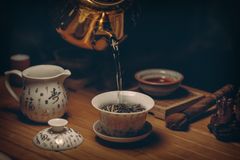
Give the leaf room. Tea bags and small infuser balls constrain the leaf so it cannot unfurl and circulate, which limits extraction.
A basket infuser, a gaiwan, or simply loose leaf in a pot with a strainer at pouring all work better.
Unglazed clay pots, particularly Yixing, absorb flavour over time and are traditionally dedicated to a single type of tea. Whether the seasoning genuinely improves the cup is debated; that they should not be washed with detergent is not.
Glass and porcelain are neutral and are the sensible default.
The common faults
Bitter and astringent. Water too hot, or steeped too long. Both, usually.
Weak and watery. Not enough leaf. Add leaf rather than time.
Flat and dull. Water problem, or stale tea.
Scum on the surface. Hard water reacting with tea compounds. Filter the water.
Storage
Tea is less fragile than coffee and it does degrade.
Airtight, away from light, heat, moisture and strong smells. Tea absorbs odours readily, which is why you should not store it next to spices.
Green teas are the most perishable and are best drunk within a year of harvest, ideally sooner. Japanese greens in particular benefit from refrigeration in sealed packaging, brought to room temperature before opening to avoid condensation.
Aged pu-erh is the exception and is stored deliberately for years, in conditions with some airflow and stable humidity.