Equipment
Scales, kettles and the rest of the kit
What is genuinely useful, what is nice to have, and what is decoration dressed up as necessity by the people selling it.
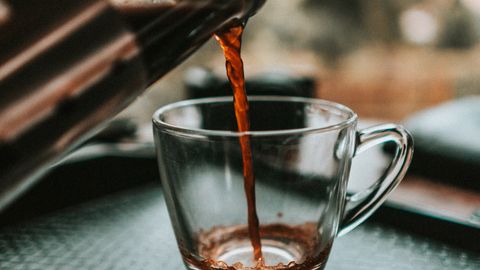
Coffee equipment ranges from essential to ornamental, and the marketing does not distinguish.
Genuinely essential
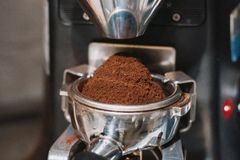
A burr grinder. Covered at length elsewhere. The single highest-impact purchase.
A scale. One gram resolution for filter, 0.1 gram for espresso. Without it you cannot repeat anything.
Something to heat water. Any kettle works to begin with.
A brewer. Almost any of them. The differences between brewers are smaller than the differences between grinders.
Worth buying fairly soon
A gooseneck kettle. The narrow curved spout gives control over pour rate and placement, which matters considerably for pour over.
Pouring from an ordinary kettle produces an uncontrolled gush that disturbs the bed and causes channelling.
Stovetop gooseneck kettles are inexpensive. Electric ones with variable temperature control are the upgrade.
Variable temperature control. Useful for coffee and close to essential for tea, where green tea at boiling is genuinely ruined.
A kettle that lets you set seventy or eighty degrees changes tea entirely.
A timer. Your phone works.
A thermometer, if your kettle is not temperature controlled. An instant-read digital one is cheap.
Useful depending on method
For espresso: a bottomless portafilter, which shows channelling directly and is the best diagnostic tool available; a distribution tool or needle stirrer; a good tamper that fits the basket properly; and a knock box.
For pour over: a range of filters, since papers differ in thickness and flow rate; a server or carafe.
For tea: a gaiwan or small pot for gongfu brewing; a basket infuser that lets leaves expand; a fairness pitcher for even distribution.
For everyone: an airtight opaque storage container, if you do not want to use the original bag.
Nice to have
A second grinder, if you make both espresso and filter regularly. Switching a single grinder between the two is tedious.
A refractometer, which measures extraction yield precisely.
Genuinely informative and expensive, and unnecessary for anyone whose palate is developing usefully.
Filter paper varieties. Different papers change flow rate and cup character measurably. Cheap to experiment with.
A milk frothing pitcher and thermometer, for anyone making milk drinks.
Mostly decoration
Expensive tampers beyond a properly fitting one. Weight and material do not change extraction.
Puck screens and various espresso accessories that promise improvement. Some help marginally; most address problems better solved by distribution and grind.
Brewers that promise to solve extraction. The brewer is a vessel. Technique, grind and coffee do the work.
Cupping spoons, unless you cup regularly. Any spoon works.
Coffee-specific cups with claimed aromatic properties. Shape does affect aroma delivery somewhat, and this is well down the priority list.
The order of spending
If you are starting from nothing and want to maximise cup quality per unit spent:
Fresh coffee from a local roaster with a roast date on the bag.
A hand grinder, which delivers remarkable quality for the money.
A scale.
A simple brewer — a cone, an Aeropress, a French press.
Better water, whether filtered or bottled.
A gooseneck kettle.
Then, and only then, consider upgrading the grinder further or adding an espresso machine.
That sequence produces excellent coffee for a modest total, and it is the sequence people follow in reverse.
Buying used
Grinders and espresso machines hold value and appear regularly on the used market.
For grinders, check burr condition and whether replacement burrs are available.
For espresso machines, check for scale damage, boiler condition and whether the model is serviceable with available parts.
A well-maintained used machine from a serviceable brand is generally a better purchase than a new machine from a brand with no parts availability.
Where the money is best spent
A useful way to think about the whole list is in terms of what each item removes.
A grinder removes uneven extraction, which is the largest single cause of bad coffee.
A scale removes guessing, which is what prevents you repeating a good result.
A temperature-controlled kettle removes an entire variable you otherwise cannot see or adjust.
A gooseneck spout removes uncontrolled pouring, which is the cause of most channelling in pour over.
Everything after that removes progressively smaller irritations, at progressively higher cost.
Which is why the order matters more than the total. Spending a large amount on the sixth item while the first is still missing is the most common mistake in home coffee, and it is entirely avoidable.
The thing to remember
Nobody has ever tasted a portafilter.
Equipment enables good technique with good coffee. It does not substitute for either, and the gap between adequate equipment and excellent equipment is smaller than the gap between stale supermarket coffee and something roasted last week.
Also by Diego Ferrant
- Buying a grinder at every budgetEquipment
- Common myths, correctedWater & Grind
- Coffee in cookingBeans & Origin
- Setting up a small home coffee barEquipment