Roasting
Home roasting: is it worth it?
Entirely achievable, considerably cheaper per kilogram, and a genuine amount of work with a long learning curve.
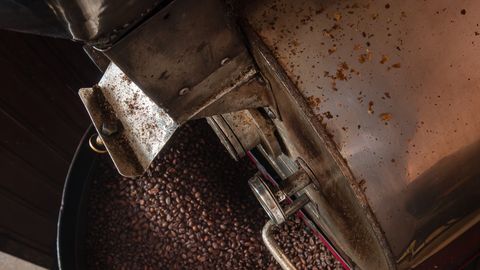
Roasting your own coffee is not difficult in principle. Heat green beans, agitate them, stop at the right moment.
Doing it consistently well is another matter, and the honest assessment is that home roasting suits people who enjoy the process rather than people who only want better coffee.
The case for it
Cost. Green coffee costs substantially less than roasted, frequently a third to a half. Over years the saving is real.
Freshness. You can roast on Tuesday and drink on Friday, which is fresher than any retail supply chain.
Control. You choose the roast level for each coffee and for each brewing method.
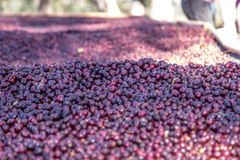
Access. Green coffee importers sell lots that retail roasters do not offer, and you can buy in small quantities from many origins.
Understanding. Roasting teaches you more about coffee than any amount of reading. Tasting the same green coffee at four roast levels is genuinely educational.
The case against
The learning curve is long. Your first months of roasting will produce coffee worse than what you can buy. This is universal.
Consistency is hard. Ambient temperature, batch size, bean density and moisture all affect the roast. Repeating a good result requires records and attention.
It is smoky. Roasting produces smoke, particularly past first crack, and chaff — the papery skin — goes everywhere.
Indoor roasting without serious ventilation is unpleasant and will set off smoke alarms.
It takes time. Roasting, cooling, and cleaning is thirty to sixty minutes for a batch that may last a week.
Small batches. Most home equipment handles a few hundred grams at a time.
The equipment options
A pan on the stove. Costs nothing. Produces uneven roasts, requires constant stirring, and is genuinely how coffee was roasted for centuries.
A good way to find out whether you are interested before spending anything.
A popcorn air popper. The classic entry point. Hot air fluidises and roasts a small batch in a few minutes.
Cheap, effective for small quantities, limited control, and hard on the appliance. Only certain designs work — those with side vents rather than bottom mesh.
Dedicated air roasters. Purpose-built fluid bed machines with temperature and time control.
Fast, relatively even, limited batch size, and the fast roast profile suits some coffees better than others.
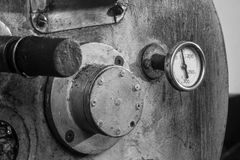
Small drum roasters. A rotating drum with a heat source, mimicking commercial equipment at small scale.
Better heat transfer and more control over the profile. More expensive, slower, and closer to what commercial roasting actually is.
Modified equipment. Heat guns with bread machines, modified rotisseries, and various improvisations. Effective and requiring effort and some caution.
What you need to know
The stages, covered elsewhere on this site: drying, Maillard, first crack, development, second crack.
Listen for first crack. An audible popping, and your primary reference point. Everything is measured relative to it.
Take notes. Batch size, ambient temperature, times at each stage, total time, and what it tasted like.
Without records you cannot repeat a success.
Cool fast. Coffee continues roasting from residual heat. Get it cooled within a couple of minutes — a colander and a fan, or two colanders to toss between.
Rest it. Freshly roasted coffee is full of carbon dioxide and tastes flat and gassy. Rest for at least a day for filter, three to fourteen days for espresso.
This surprises people who expect just-roasted coffee to be at its peak.
Buying green
Green coffee is stable for a year or more if stored cool, dry and dark, which makes buying several kilograms practical.
Look for current crop and a stated harvest year.
Buy small quantities of several origins initially rather than a large sack of one. Variety teaches faster.
Note that green coffee varies in density and moisture, and dense high-grown beans need more energy than soft low-grown ones.
Safety
Roasting produces smoke and, at dark levels, considerable smoke.
Roast outdoors, in a garage with the door open, or under a genuinely effective extraction hood.
Chaff is light and flammable. Keep it away from heat sources and clean up.
Do not leave a roast unattended.
The honest recommendation
Try it with a popcorn popper or a pan before buying anything.
If after ten batches you are enjoying the process rather than enduring it, invest in proper equipment.
If you are not, buy from a good roaster and spend the money on a better grinder. You will drink better coffee and reclaim your Sunday mornings.
Also by Diego Ferrant
- Buying a grinder at every budgetEquipment
- Common myths, correctedWater & Grind
- Coffee in cookingBeans & Origin
- Setting up a small home coffee barEquipment