Tea
Sweet Tea And The American South
Southern sweet tea is a specific preparation, brewed strong and sweetened while hot, and both choices exist because sugar behaves differently in cold liquid.
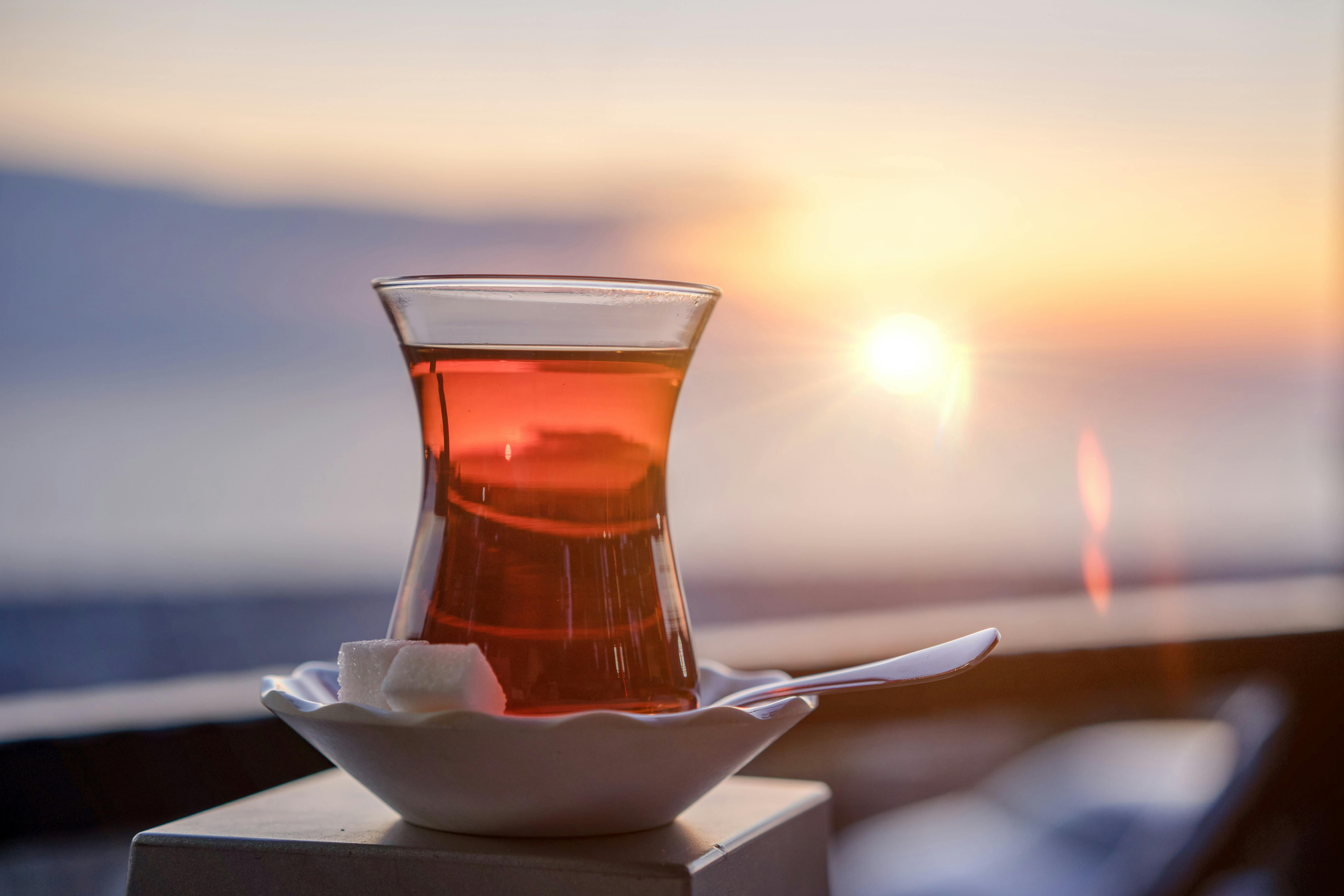
Sweet tea is not iced tea with sugar added at the table. It is a distinct preparation with rules that follow from chemistry and from history.
Sugar has to go in while the tea is hot
Sucrose dissolves far more readily in hot water than in cold. Stirring sugar into an already chilled glass leaves much of it sitting at the bottom.
Sweetening the hot concentrate before dilution and chilling solves that completely. The sugar is fully in solution before the temperature drops.
This is why a glass of sweet tea tastes uniformly sweet from top to bottom, while sugar added at the table gives a sweet last mouthful and a plain first one.
The brew is made strong and then diluted
Ice melts into the glass and dilutes whatever is in it. A tea brewed at drinking strength becomes weak within minutes of being poured over ice.
Brewing a concentrate and diluting with cold water compensates in advance. It also chills the liquid faster, which reduces cloudiness.
The strength also has to stand up to sugar, which suppresses the perception of bitterness and makes a weak tea taste like almost nothing.
Black tea in bags is the traditional base
The style developed around inexpensive, briskly astringent black teas, typically blends of small broken leaf. Those teas extract quickly and hold flavor through dilution.
Delicate whole-leaf teas do not suit the preparation. Their character is lost behind the sugar and the ice.
A pinch of baking soda is a common household addition, and it works by reducing perceived astringency and helping keep the tea clear.
Cloudiness has a specific cause
Tea polyphenols and caffeine bind as the liquid cools, forming a haze known as tea cream. It is harmless and purely visual.
Rapid chilling makes it worse, and very hard water contributes as well. Letting the concentrate cool somewhat before refrigerating reduces it.
Commercial bottled versions avoid the problem with filtration and additives. Home versions live with it or manage the cooling rate.
The regional pattern reflects supply and climate
Iced tea spread nationally, but the sweetened, brewed-by-the-gallon version concentrated in the South, where ice, sugar and hot weather all arrived together.
Ordering tea in much of the region still means sweet by default, and unsweetened has to be specified. The reverse holds across most of the country.
That default is the clearest sign that it functions as its own beverage rather than as a variation on hot tea served cold.