Tea
Pu-erh and aged tea
The only genuinely fermented tea category, deliberately aged, compressed into cakes, and surrounded by an unusual amount of misinformation.
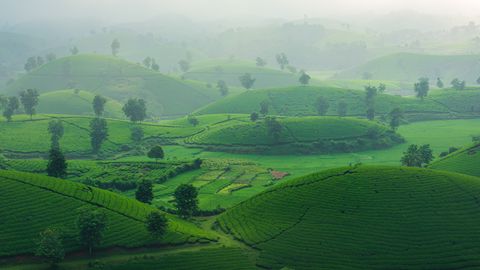
Pu-erh comes from Yunnan, is made from large-leaf varietals, and is the category where microbial activity genuinely occurs.
It is also the only tea widely bought as an investment, which has produced a market with real problems.
Sheng and shou
The two types, and they are almost different products.
Sheng, or raw pu-erh. Processed similarly to green tea — withered, pan-fired, rolled and sun-dried — then compressed and aged.
Young sheng is bright, astringent, bitter and vigorous, with a strong throaty quality and a distinctive returning sweetness after the initial bitterness.
Over years and decades it transforms slowly, mellowing and developing depth, dried fruit, camphor, wood and an enveloping smoothness.
The ageing depends entirely on storage conditions.
Shou, or ripe pu-erh. Developed in the 1970s to simulate ageing quickly.
The leaf is piled, dampened and turned over several weeks in a controlled microbial fermentation, then compressed.
Produces earthy, smooth, sweet, dark tea within months. Notes of wet earth, wood, dates and dark chocolate.
Shou is not aged sheng and does not become it. It is a distinct product with a distinct process.
Compression
Pu-erh is traditionally compressed into shapes: round cakes called bing, bricks, nests called tuocha, and mushrooms.
Originally for transport along the tea horse roads, where compressed tea travelled better.
Compression also affects ageing — the interior of a tightly compressed cake ages more slowly than loose leaf, which contributes to the gradual development.
Loose pu-erh exists and is generally consumed younger.
Storage and ageing
The variable that determines everything.
Dry storage, associated with Kunming and with drier climates, produces slow ageing with a cleaner, brighter result over a longer period.
Humid storage, associated with Hong Kong, Guangdong and Malaysia, accelerates transformation and produces a darker, earthier result more quickly.
Excessively humid storage produces mould and off flavours, and wet-stored tea has been a genuine problem in the market.
For home storage: stable temperature, moderate humidity — commonly cited as somewhere around sixty to seventy percent — some airflow, no strong odours, and no direct sunlight.
Do not store pu-erh airtight. Unlike other teas, it needs some air exchange to develop.
Keep sheng and shou separate, since the aromas transfer.
The market problems
Worth stating plainly.
Pu-erh has been the subject of speculative bubbles, with prices for certain factories and years driven by investment rather than consumption.
Misrepresentation is widespread: false ages, false origins, false factory attributions, and shou sold as aged sheng.
Wrappers are copied. Documentation is forged.
The practical response: buy from vendors who explain their sourcing, buy samples before cakes, learn what young sheng and genuinely aged sheng taste like, and be extremely sceptical of cheap old tea.
Genuinely aged sheng from a good source is expensive for real reasons.
Brewing it
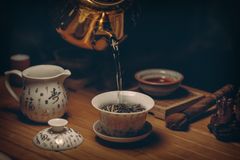
Gongfu style, essentially always.
Break the cake carefully with a pu-erh pick or knife, prising leaves apart along their layers rather than stabbing through. Broken leaves brew harsh.
Rinse the leaves once or twice with boiling water, discarding it. This wakes the leaf and removes storage dust.
For shou, rinse twice.
Boiling water for both types.
Short infusions, five to fifteen seconds initially, increasing gradually.
Good pu-erh yields many infusions — fifteen or more is not unusual for quality material.
Young sheng can be aggressive. Shorter steeps and slightly cooler water help.
Vessels. A gaiwan is versatile. Yixing clay pots are traditional and are usually dedicated to one type, since the unglazed clay absorbs character.
What ageing actually does
Microbial and enzymatic activity continues slowly, converting polyphenols and reducing astringency.
Bitterness declines. Sweetness and depth increase. The liquor darkens.
The transformation takes years to be substantial and decades to be complete, which is why genuinely old pu-erh is scarce and expensive.
Not all sheng ages well. Poor material stays poor; ageing does not rescue it. The tea must have sufficient substance to develop.
Other dark teas
Pu-erh is the famous one and not the only fermented tea.
Liu Bao from Guangxi, Fu Zhuan from Hunan with its deliberate golden flower fungus, and various Anhua dark teas all undergo microbial fermentation.
These are generally cheaper than pu-erh, less speculatively traded, and worth exploring for anyone who likes the category.
Where to start
Buy samples rather than cakes. A cake is a substantial commitment of both money and years.
Try a young sheng, a mid-aged sheng, and a decent shou together. The differences are enormous and instructive.
Then decide whether this is a rabbit hole you want to enter, because it is a deep one.