Roasting
Supermarket Coffee And Industrial Roasting Scale
Coffee roasted by the ton uses continuous machines, short cycles and blend recipes built to a price, which explains both its consistency and its distance from specialty practice.
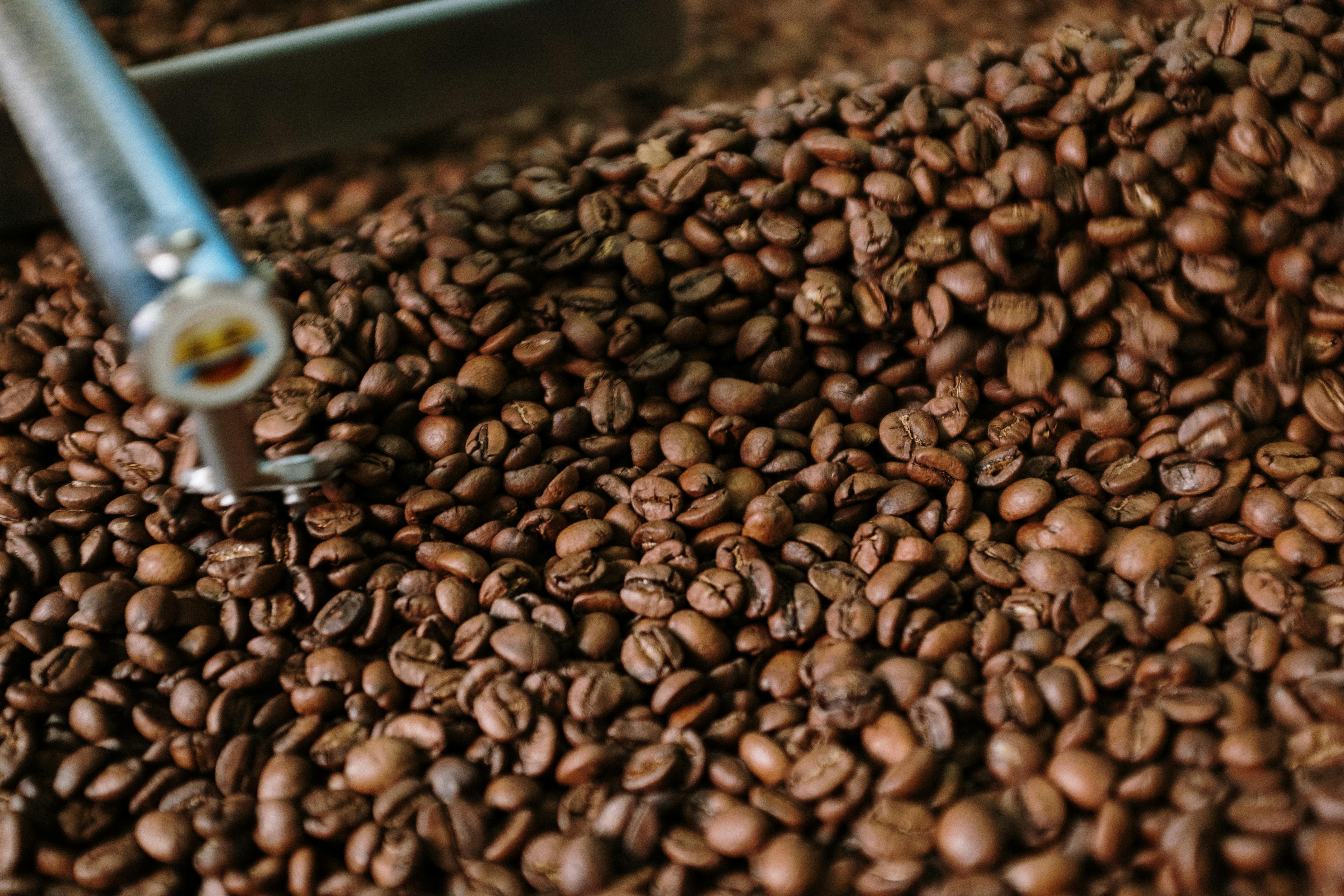
The largest share of coffee sold in the United States is roasted in facilities that operate on a scale most drinkers never see. The methods are genuinely different, not merely bigger.
Continuous roasting replaces the batch
Rather than filling a drum and emptying it, industrial systems move coffee through a heated chamber in a steady stream, with green entering at one end and roasted coffee leaving the other.
This eliminates the start-and-stop cycle and allows very high throughput from a single line. Output is measured in tons per hour rather than pounds per batch.
The tradeoff is control granularity. The profile is a set of steady-state conditions the whole stream passes through, not a curve shaped for one batch.
Cycles are short and heat is intense
Many high-volume systems use very hot air moving rapidly through the beans, completing a roast in a fraction of the time a drum takes.
Short roasts retain more mass and produce a bean that is less fully developed inside relative to its surface color. That difference is measurable and deliberate.
Yield per pound of green is part of the reason. Less time means less weight lost, which matters when purchasing is measured in containers.
Blends are built to a cost target first
A supermarket blend is specified as a price point and a flavor description. Buyers assemble green to meet both, substituting origins as markets move.
Robusta is frequently part of the recipe, contributing body, crema in espresso preparations and caffeine at lower cost than arabica.
The recipe changes constantly while the taste target does not. Blending and quality control exist to keep the product stable through those substitutions.
Packaging is engineered for a long shelf life
Coffee is degassed before packing, or packed with a valve, so the container does not swell. Vacuum bricks and nitrogen flushing remove oxygen.
This holds the coffee in acceptable condition for months, which the distribution system requires. A bag has to survive warehousing and shelf time.
What it does not do is preserve the aromatics that fade regardless. The coffee remains stable rather than remaining fresh.
The two industries answer different questions
Industrial roasting solves for consistency, cost and scale across a national distribution network. It performs that task extremely well.
Specialty roasting solves for expression of a particular lot at a particular moment, in volumes measured in sacks.
Comparing them on cup quality alone misses that they are optimizing different variables. The methods follow directly from what each is trying to deliver.