Roasting
First Crack And Why Roasters Listen For It
An audible cracking sound partway through a roast marks a physical change inside the bean, and it is the landmark almost every roasting decision is measured against.
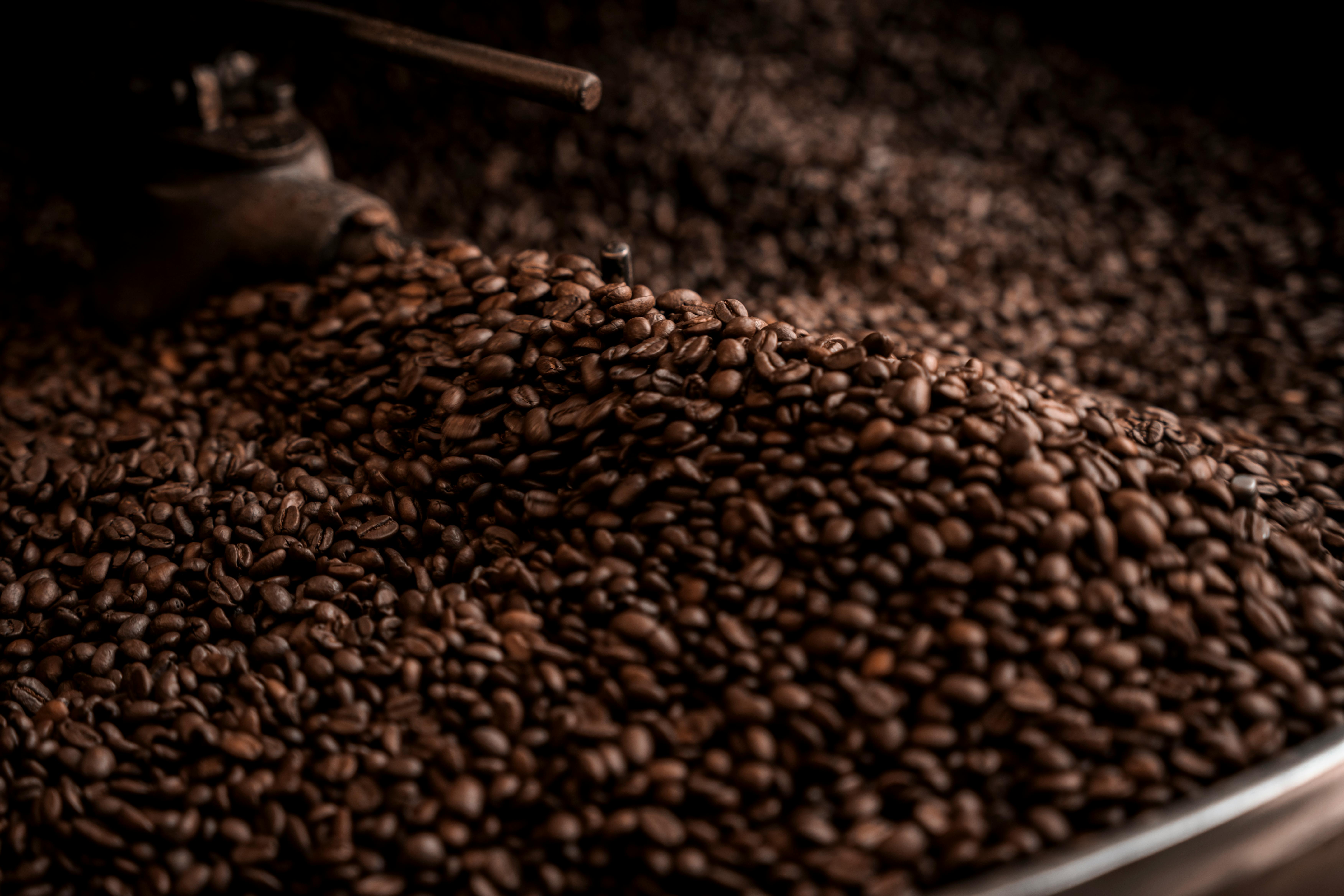
Roasters describe their process in relation to a sound. First crack is not a stylistic reference point but a physical event, and it happens at a reasonably predictable stage of the bean's transformation.
The bean builds internal pressure
Green coffee contains a few percent water by weight, held within a dense cellular structure, and heating drives that water towards steam inside the bean rather than simply evaporating from the surface.
Chemical reactions in the same period generate carbon dioxide, which adds to the gas trying to occupy a space that has not grown to accommodate it.
Pressure builds until the cell walls can no longer contain it, and the structure gives way suddenly rather than gradually, which is what produces the noise.
The bean changes physically at that moment
The rupture expands the bean noticeably, and the crease along its face opens up as the internal structure loosens and volume increases.
Density falls sharply as a result, so a batch that weighed a certain amount going in occupies considerably more space coming out despite having lost weight.
Porosity increases at the same time, which is why beans roasted past this point release gas and absorb water far more readily than green coffee does.
It marks the transition to a drinkable roast
Before first crack the bean tastes grassy, bready and vegetal, since the reactions that generate roasted flavour have not progressed far enough.
The chemistry that produces the recognisable aromas of coffee accelerates around and after this point, so essentially all commercial roasts finish beyond it.
How far beyond is the central decision, and every roast level from light through dark is described in terms of distance past the crack.
Energy management around it is delicate
The rupture is endothermic in effect, absorbing energy as moisture flashes to steam, so bean temperature rise slows and can stall entirely if heat is not managed.
Applying too much heat to compensate can send the roast racing forward, while too little leaves it drifting and the coffee tasting flat and papery.
Much of a roaster's skill is spent on the transition through this window, since what happens immediately afterwards determines the character of the finished coffee.
The sound is variable and not always clean
Denser high-grown beans crack more sharply and more audibly, while softer beans from lower elevations produce a duller and more scattered sound.
Uneven moisture across a batch spreads the event over a longer window, so the crack begins gradually and never becomes the clear rolling sound a uniform lot gives.
Roasters therefore combine what they hear with temperature readings and colour, because the sound alone is a landmark rather than a measurement.