Roasting
Drum And Air Roasters Are Not The Same Machine
The two dominant roaster designs transfer heat to the bean by different routes, which changes roast speed, evenness and the kind of control the operator has.

Commercial coffee is roasted in machines of two broad types, and the choice is not a matter of scale alone. How heat reaches the bean shapes what the roaster can and cannot do.
Drum roasters heat by contact and radiation
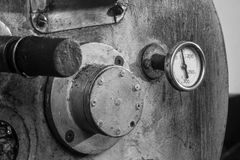
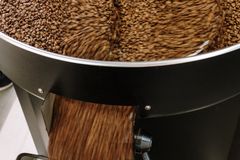
A rotating metal drum tumbles the beans while a burner heats the drum from beneath, so beans receive heat by touching hot metal, by radiation from the drum wall, and from air passing through.
The drum itself stores a great deal of heat, which buffers the process and means the machine responds to burner changes gradually rather than immediately.
That thermal mass is often described as forgiving, since it smooths out fluctuations, though it also means corrections take time to appear in the bean temperature.
Air roasters heat by moving hot air
Fluid bed designs suspend the beans in a stream of hot air, which both agitates them and transfers essentially all of the heat by convection.
Because there is little metal in contact with the beans and little thermal mass in the system, changes to airflow or temperature take effect almost at once.
Roasts are typically faster, since convection transfers heat efficiently and every bean surface is exposed to moving air continuously.
The differences show in the cup
Fast convective roasting tends to preserve acidity and produce a bright, clean profile, since less time passes at the temperatures that break those compounds down.
Drum roasting with its slower pace and conductive component is generally associated with heavier body and a rounder, more caramelised sweetness.
Neither result is inherent, since a skilled operator can push either machine some way towards the other's typical profile, but the defaults differ.
Chaff and evenness are practical differences
The papery skin released during roasting must be removed, and air roasters carry it away in the airstream continuously to a collector.
Drum machines also extract chaff, but some remains in the drum and can scorch, which is one reason regular cleaning is part of the routine.
Air suspension keeps every bean moving independently, which tends to give more even roasting across a batch than tumbling in a drum can guarantee.
Hybrids dominate in practice
Most modern drum roasters allow the operator to control airflow through the drum, which shifts the balance between conductive and convective heat during the roast.
Some designs heat the air before it enters rather than heating the drum directly, giving convective transfer within a drum's tumbling action.
Describing a machine as a drum or an air roaster therefore identifies its architecture rather than fully predicting how it behaves in use.