Brewing Methods
Moka pot: the method everyone gets wrong
A stovetop pressure brewer that produces something excellent when treated correctly, and something acrid when not.
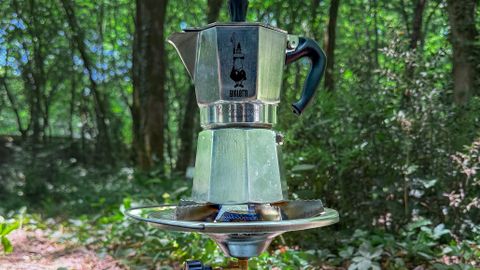
The moka pot is the most common coffee maker in Italian homes and among the most maligned elsewhere, mostly because the standard instructions produce a bad result.
How it works
Water in the lower chamber is heated. Steam pressure builds and forces water up through a basket of ground coffee and out through a spout into the upper chamber.
Pressure is roughly one to two bar — far below espresso's nine — so this is not espresso, despite frequently being described as such. It is a strong, concentrated brew of its own kind.
Why it usually tastes bad
Two reasons, and both are fixable.
Starting with cold water. The lower chamber takes several minutes to heat, during which the coffee sits above it being cooked by rising steam.
This produces the burnt, acrid character people associate with the method.
Leaving it on the heat too long. At the end of the extraction, when most of the water has passed through, steam rushes through the bed and strips out bitter compounds.
This is the gurgling, sputtering phase, and everything that comes out during it is unpleasant.
The method that works
Fill the lower chamber with hot water, just below the safety valve.
Boiling water from a kettle. This is the single largest improvement.
The chamber will be hot, so hold it with a cloth.
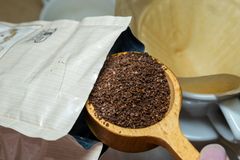
Fill the basket with medium-fine ground coffee, level, without tamping.
Tamping restricts flow and can produce excessive pressure. Fill it and level it with a finger.
Grind should be finer than filter and coarser than espresso — roughly like fine sand.
Assemble and place on medium-low heat, with the lid open so you can see.
Low heat. High heat forces the extraction too fast and produces a harsh cup.
Watch for the coffee to emerge. It should come out slowly, in a steady dark stream, ideally with a honeyed quality.
If it erupts violently, the heat is too high.
Remove from the heat when the stream turns pale and blonde, before the gurgling starts.
Some people run the base under cold water at this point to stop extraction immediately. This works and is not essential if you catch it early.
Stir the upper chamber before pouring, since the first and last portions differ in strength.
Ratios
The pot dictates most of it — the basket holds what it holds and the chamber holds what it holds.
Which means a moka pot works best at its designed size. A three-cup pot half filled does not work well.
If you want less coffee, use a smaller pot rather than underfilling a large one.
Grind adjustment
The main variable available.
Too fast, weak and sour. Grind finer.
Sputtering early, harsh. Grind coarser, or lower the heat.
Do not compensate by tamping. Change the grind.
Materials
Aluminium is traditional, conducts heat well, and is what most classic pots are made of.
It should not be washed with detergent or in a dishwasher — rinse with hot water only. Detergent strips the seasoned layer and aluminium reacts with harsh cleaners.
Aluminium pots do develop a patina, which many users consider beneficial.
Stainless steel is more durable, dishwasher safe, works on induction hobs, and heats less evenly.
Aluminium pots require an induction adapter if you have an induction hob.
Maintenance
Replace the rubber gasket when it hardens or cracks, typically every year or so with regular use. A failing gasket causes leaks and poor pressure.
Clean the filter plate — the small perforated disc — which clogs with fines.
Check the safety valve is not blocked. This is a genuine safety component and a blocked valve on an over-pressurised pot is dangerous.
Rinse everything and dry thoroughly. Storing it damp and assembled produces mould and off flavours.
Roast choice
Traditionally medium to dark, which suits the method's intensity and the way it is typically drunk — small, strong, sometimes with sugar.
Lighter roasts can work and require more care with grind and heat, and they can taste sharp in a method that concentrates so heavily.
What to do with it
Straight, in a small cup, is traditional.
Diluted with hot water it makes a reasonable americano-style drink.
With steamed or heated milk it makes a decent approximation of a milk coffee, and this is how a great many Italian households actually drink it in the morning.
It will not produce espresso crema, because the pressure is not there. Anyone selling you a moka pot on that basis is overstating it.
Also by Diego Ferrant
- Buying a grinder at every budgetEquipment
- Common myths, correctedWater & Grind
- Coffee in cookingBeans & Origin
- Setting up a small home coffee barEquipment