Equipment
Grinder Retention And How To Measure It
Coffee left behind inside a grinder mixes stale grounds into the next dose and makes weights unreliable, and the amount varies enormously between designs.
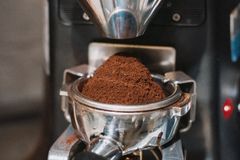
Grinders do not deliver everything you put into them. A portion stays inside, comes out later mixed with the next coffee, and quietly undermines both consistency and dose accuracy.
Grounds get trapped by geometry and static
The path from burrs to exit includes chambers, chutes and corners, and fine particles settle in all of them rather than travelling straight out under gravity.
Grinding generates static charge on the particles, which makes them cling to plastic surfaces and to each other instead of falling freely down the chute.
How much is held depends heavily on the internal design, and grinders with short vertical exit paths retain far less than those with long horizontal chutes.
Retained coffee stales quickly
Ground coffee has an enormous surface area exposed to air, and it loses aromatics and takes on oxidised character within hours rather than days.
Material sitting inside the grinder overnight is therefore noticeably degraded by the time it emerges into the following morning's dose.
Blending a small quantity of stale grounds into fresh coffee dulls the cup in a way that is hard to attribute, because nothing about the process looks wrong.
It also breaks dose accuracy
If the grinder holds back part of a dose and releases part of the previous one, the weight coming out matches the weight going in only on average.
For espresso, where a fraction of a gram shifts the shot, that variability alone can account for inconsistency that gets blamed on tamping or distribution.
Grinding directly into the portafilter rather than into an intermediate container removes one transfer point but does nothing about what stays inside the machine.
Measuring it takes a scale and two runs
Weigh a dose of beans, grind it, and weigh what comes out. The shortfall is what the grinder kept, though some of it displaced material from a previous session.
Repeating with a second identical dose gives a more useful figure, since by then the machine is holding a steady amount and input roughly equals output.
The difference between the first and second runs indicates how much the grinder holds at rest, which is the number that matters for staleness.
Reducing it is mostly about habit
Single dosing, where only the beans for one brew are loaded each time, avoids a hopper full of coffee sitting exposed but does not address internal retention.
Adding a few drops of water to the beans before grinding suppresses static considerably, and noticeably less material clings inside as a result.
Tapping or brushing the chute clears loose grounds, and some grinders accept a bellows or a puff of air that pushes the remainder out deliberately.