Brewing Methods
Extraction: the one idea that explains every brew
Sour, bitter, thin, harsh — nearly every coffee fault comes back to how much you pulled out of the grounds.
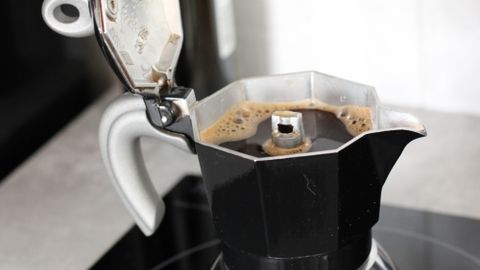
Roasted coffee is mostly insoluble plant material. Somewhere between a quarter and a third of it can dissolve in water, and brewing is the process of choosing how much of that you take.
Take too little and the cup tastes sour, thin and salty. Take too much and it tastes bitter, drying and hollow. There is a band in the middle where it tastes like coffee.
The order things dissolve in
This is the part that makes the whole thing make sense.
Compounds do not leave the grounds all at once. They come out roughly in order.
First, the fruit acids and some of the aromatic compounds. Bright, sharp, sometimes sour.
Then, the sugars and the compounds that give body and sweetness. This is the good part.
Last, the bitter compounds and the dry, astringent plant material.
An under-extracted cup has the first group and not enough of the second. An over-extracted cup has all three.
Which is why under-extraction tastes sour and over-extraction tastes bitter, and why the fix for each is the opposite of the fix for the other.
The number people quote
Extraction yield is the percentage of the dry coffee that ended up dissolved in the cup.
The commonly cited target band is roughly eighteen to twenty-two percent, established through decades of tasting panels and still a reasonable starting point.
It is measured with a refractometer, and almost nobody outside a lab or a serious café owns one.
You do not need it. Your mouth detects the difference reliably once you know what you are looking for.
Strength is a different thing
The distinction that trips people up constantly.
Extraction is how much you took out of the coffee.
Strength is how concentrated the result is — how much dissolved coffee per unit of water.
They are independent. You can have a weak, over-extracted cup, and a strong, under-extracted one.
Adding more water to a finished brew makes it weaker without changing the extraction at all. Adding more coffee to the same water makes it stronger and, all else equal, slightly less extracted.
If a cup tastes weak but pleasant, use more coffee. If it tastes weak and sour, extract more.
The four levers
Everything you can change comes down to these.
Grind size. Finer grounds have more surface area and extract faster. This is the biggest and most immediate lever.
Time. Longer contact extracts more.
Temperature. Hotter water extracts faster. The commonly recommended range is roughly ninety to ninety-six degrees Celsius, or about one hundred ninety-five to two hundred five Fahrenheit.
Agitation. Stirring, pouring turbulence, and how the water moves through the bed. More agitation extracts more.
Ratio — coffee to water — mostly changes strength, though it interacts with extraction too.
Diagnosing a bad cup
Taste it and ask one question: is it sour or bitter?
Sour, thin, sharp, salty, an unpleasant emptiness in the finish. Under-extracted.
Grind finer. Brew longer. Use hotter water. Stir more.
Change one thing at a time.
Bitter, drying, harsh, ashy, lingering unpleasantly. Over-extracted.
Grind coarser. Brew shorter. Use slightly cooler water. Reduce agitation.
Both sour and bitter at once. Uneven extraction — some grounds over-extracted, some under.
Usually caused by an inconsistent grind, an uneven bed, or channelling where water found a fast path through.
The fix is a better grinder, a flatter bed, and a more even pour.
Why the same grind does not work everywhere
Because the levers interact.
Espresso uses very fine grounds because contact time is under half a minute. French press uses coarse grounds because contact time is four minutes. Cold brew uses coarse grounds because contact time is twelve hours and low temperature slows everything down.
Each method is a different point on the same trade-off, arriving at roughly the same extraction by different routes.
The one habit worth building
Change one variable at a time, and write it down.
Dose, grind setting, water weight, temperature, time, and what it tasted like.
Three weeks of that and you will understand your own equipment better than any guide can tell you, because guides describe someone else's grinder.
Also by Marcus Obeng
- What we would tell someone starting outEquipment
- When your coffee suddenly gets worseEquipment
- A morning routine that produces good coffee every dayBrewing Methods
- Coffee grounds and wasteEquipment