Brewing Methods
Steeped Coffee Bags And What They Give Up
Single-serve coffee bags borrow the tea bag format, and they inherit its constraints: a fixed dose, a fixed grind and a filter that limits how much the water can move.
Coffee sold in individual steeping sachets has spread through hotel rooms, camping supplies and travel kits. The format solves a real problem and pays for it in specific ways.
The format fixes every variable in advance
Dose, grind and filter material are decided at the factory. The drinker chooses water volume, temperature and time, and nothing else.
That is the point of the product. It works where no grinder, scale or brewer exists, and it removes the possibility of getting the ratio badly wrong.
The cost is that it cannot be dialed in. A coffee that tastes weak at four minutes will taste weak at six, because the limit is the dose rather than the time.
Grind has to be coarse enough to stay contained
Fine particles pass through the sachet material and end up in the cup. Manufacturers therefore grind coarser than the extraction would ideally want.
Coarse grounds in a short steep extract less, which pushes the cup toward sourness and thinness. Extending the steep only partly compensates.
Some bags use a tighter filter to allow a finer grind. That slows water movement through the bag, which trades one limit for another.
Water movement is restricted by the bag itself
In an open immersion, grounds circulate freely and every particle meets fresh water. Inside a sachet the grounds are held together and the outer layer shields the inner one.
Agitating the bag helps considerably, which is why instructions usually say to dunk it. Static steeping leaves the center of the bag underextracted.
The bag also floats until it is saturated, keeping part of the dose out of the water entirely for the first minute. Pushing it under early is worth doing.
Freshness depends entirely on the packaging
Ground coffee stales quickly, so these products live or die on their outer wrapper. A sealed foil sachet with a low-oxygen fill holds up for months.
Bags sold loose in a box, or in a wrapper that lets air through, go flat well before the printed date. The smell on opening is the honest test.
This is why the same product can taste acceptable from one box and papery from another. The variable is storage, not the roast.
Where it beats the alternatives
Compared with the instant sachet next to it in a hotel drawer, a steeped bag is brewing real coffee and tastes like it. That comparison is the one it is designed to win.
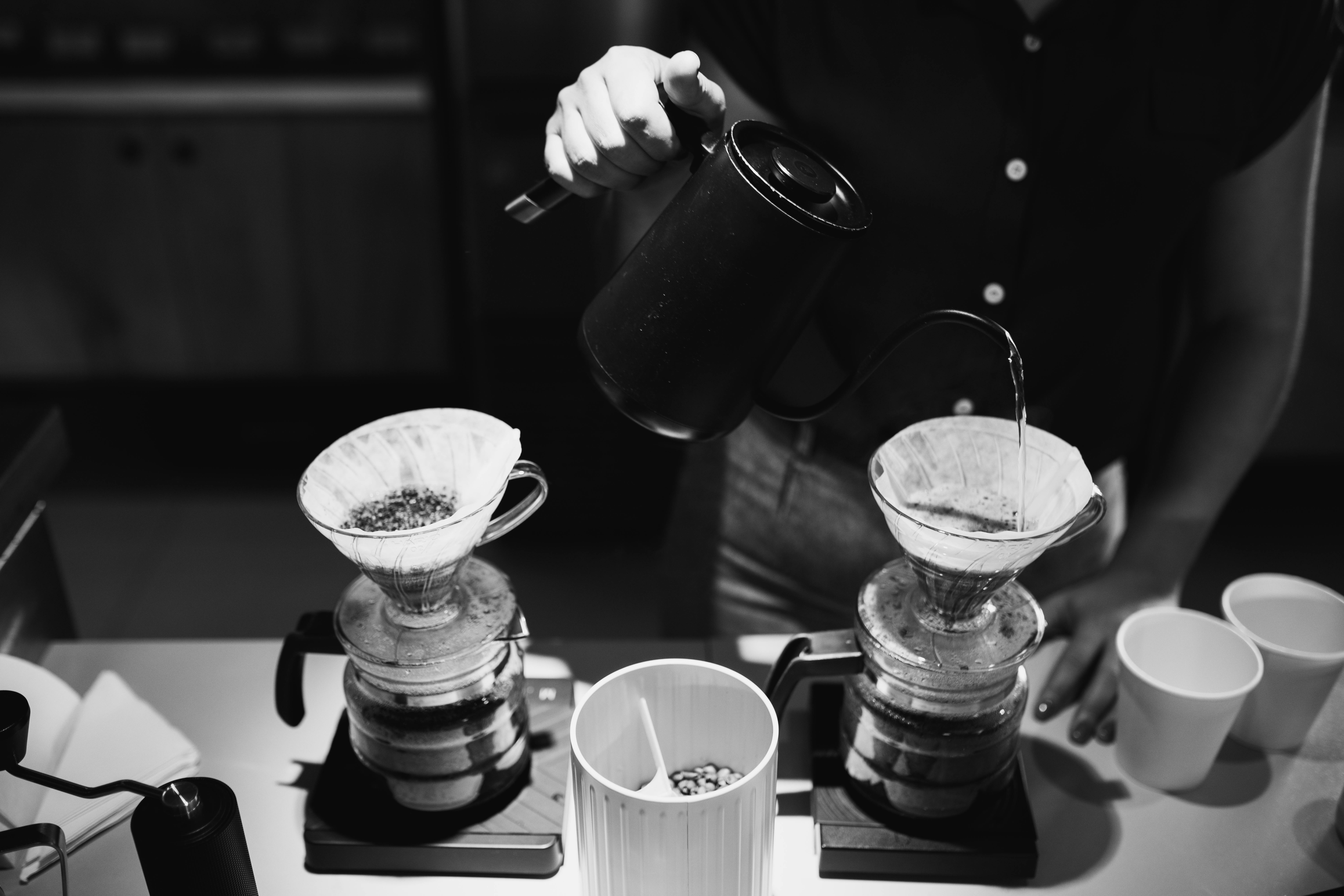
Compared with a small pour over dripper and a fresh grind, it loses on every measure except effort. It is a travel format, not a home one.
Judging it against a careful home brew misses what it is for. The relevant question is whether it beats the option actually available in the room.
Also by Marcus Obeng
- What we would tell someone starting outEquipment
- When your coffee suddenly gets worseEquipment
- Coffee grounds and wasteEquipment
- Recipe notebooks and dialling in systematicallyWater & Grind