Water & Grind
Sensory training: learning to taste
Tasting is a learnable skill, and most of it is about attention and vocabulary rather than about having a special palate.
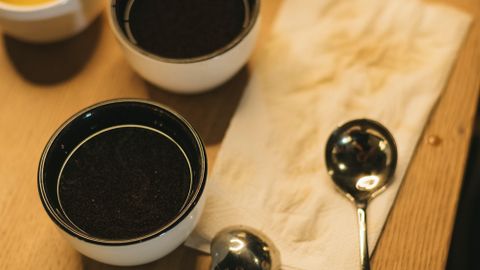
People assume tasting ability is innate. Some of it is — there is genuine variation in taste receptor density and in sensitivity to specific compounds.
Most of the difference between a novice and an experienced taster is training, attention and vocabulary.
What is actually happening
The tongue detects five basic tastes: sweet, sour, salty, bitter and umami. That is essentially all it does.
Everything else we call taste is smell — volatile compounds reaching the olfactory receptors, mostly retronasally, through the back of the throat while eating and drinking.
Which is why food is tasteless with a blocked nose, and why slurping coffee loudly aerates it and drives volatiles upward.
Texture, temperature and chemical sensations like the astringency of tannins add further dimensions.
The three exercises that work
Comparative tasting. The single most effective method.
Taste two things side by side rather than one at a time. Differences that are invisible in isolation become obvious in comparison.
Two coffees, two roast levels of the same coffee, the same coffee brewed two ways.
Reference tasting. Taste the thing you are trying to identify, deliberately.
If you cannot recognise blackcurrant in a Kenyan, eat blackcurrants attentively, then taste the coffee.
Smell spices individually from the cupboard. Taste single fruits, noting what distinguishes them.
You cannot recognise a reference you do not have.
Attribute isolation. Taste for one thing at a time.
This cup, only acidity: how intense, what kind — citric, malic, tartaric?
Then only body. Then only sweetness. Then only finish.
Trying to assess everything simultaneously produces vague impressions.
Building vocabulary
The bottleneck for most people is naming, not perceiving.
Work hierarchically, from broad to specific.
Is it fruity, floral, nutty, chocolatey, spicy, earthy, vegetal, roasty?
If fruity — citrus, berry, stone fruit, tropical, dried?
If citrus — lemon, lime, orange, grapefruit, bergamot?
The published flavour wheels are organised exactly this way and are useful as a prompt rather than as a checklist.
Your associations do not need to match anyone else's. Consistency with yourself is what matters.
Practical training exercises
Sugar solutions. Make solutions at several concentrations and identify them blind. Trains sweetness threshold.
Acid solutions. Citric, malic, tartaric, phosphoric acids in water at low concentrations, tasted comparatively.
They taste genuinely different, and learning them makes coffee acidity descriptions meaningful rather than abstract.
Salt. A tiny amount of salt in coffee reduces perceived bitterness noticeably. Try it — it is instructive about how the tastes interact.
Blind triangle tests. Three cups, two identical and one different. Identify the odd one.
This is the standard sensory science method and it is humbling. It tells you whether you can actually detect a difference or are imagining it.
Aroma kits exist for coffee and wine, containing standardised aroma references. Expensive and effective.
A cheaper version is your own kitchen: smell every spice, every fruit, coffee grounds, wood, leather, tobacco, flowers.
Conditions that matter
Temperature. Very hot liquid anaesthetises the palate and suppresses volatile release differently.
Taste as it cools. Most defects and much of the sweetness appear below sixty degrees.
Palate state. Do not taste immediately after strong flavours, toothpaste, or smoking.
Rinse with water between samples.
Environment. Ambient smells interfere. Perfume, cooking and cleaning products all affect results.
Time of day. Sensitivity is generally better in the morning before the palate has been through much.
Fatigue. Sensory fatigue is real. After six or eight samples, discrimination declines noticeably.
The expectation problem
The most important thing to know about tasting.
Expectation substantially shapes perception. Knowing a coffee is expensive, or is described as having blueberry notes, makes people more likely to taste those things.
This is well demonstrated in wine research and applies equally to coffee.
Which is why blind tasting matters, and why reading tasting notes before tasting reduces the value of the exercise.
Taste first, form an impression, then read the notes.
Realistic expectations
You will not develop a professional palate in a month.
You will, within a few weeks of deliberate attention, reliably distinguish processing methods, roast levels and broad origin characteristics, and identify under- and over-extraction confidently.
That is enough to make every other decision on this site meaningful.
The rest accumulates over years, and it accumulates faster with comparison, references and notes than with drinking a lot of coffee inattentively.
Also by Diego Ferrant
- Buying a grinder at every budgetEquipment
- Common myths, correctedWater & Grind
- Coffee in cookingBeans & Origin
- Setting up a small home coffee barEquipment