Brewing Methods
Recipes Do Not Transfer Between Brewers
A ratio and a grind setting that work beautifully in one cone can fail in another, because filter geometry and drainage differ more than the outward similarity suggests.
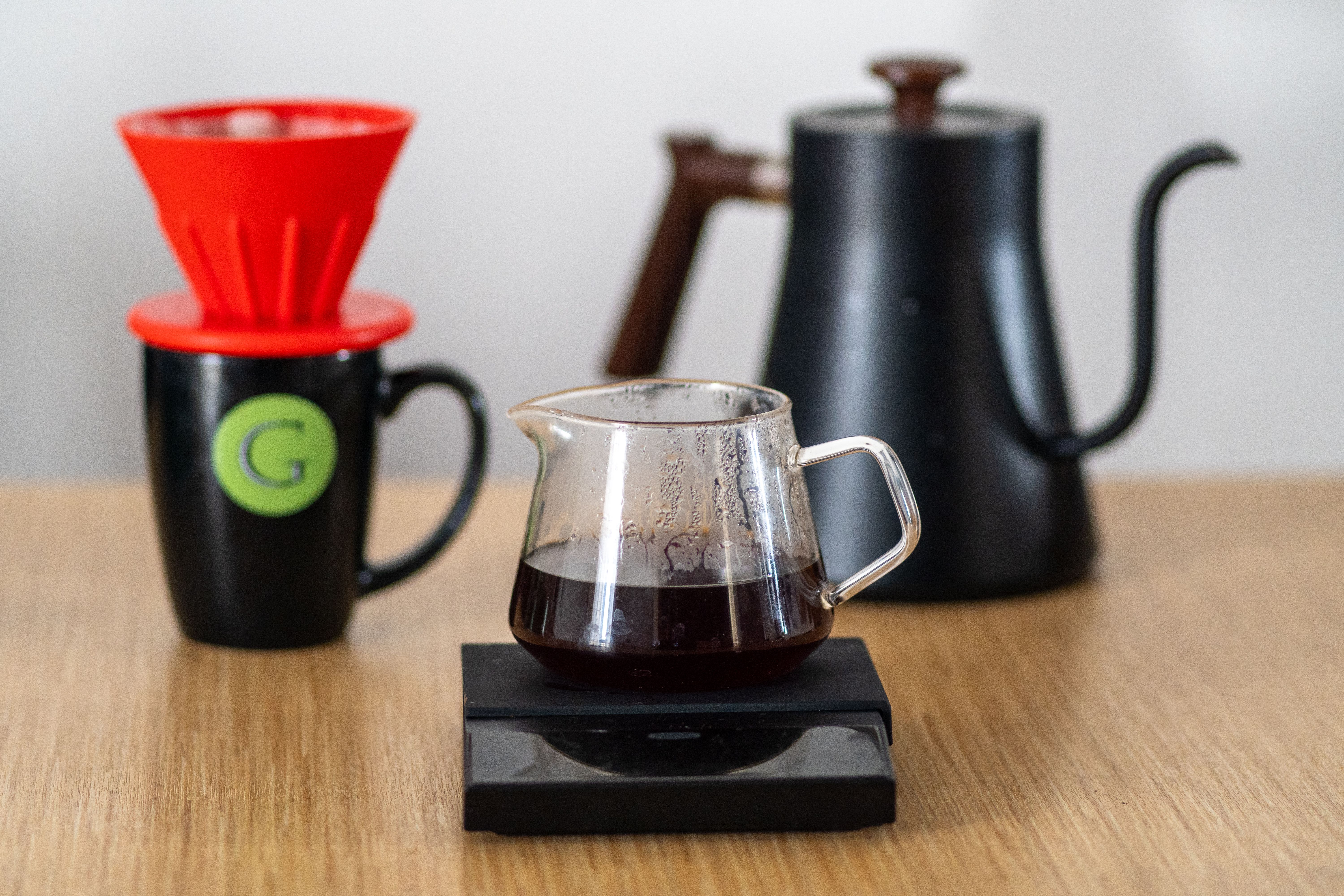
A recipe that produces an excellent cup in one dripper often disappoints in another that looks nearly identical. The recipe is not portable because it encodes properties of the specific device.
Geometry sets the depth of the bed
The same dose of coffee forms a deep narrow column in a steep cone and a shallow wide layer in a flat-bottomed basket. Water travels very different distances through each.
A deep bed means longer contact per unit of water and more resistance, so it drains slower at the same grind. A shallow bed does the opposite.
Moving a recipe between the two without adjusting grind guarantees that one of them will be badly extracted.
Drainage hardware differs more than it appears
Some brewers drain through a single large hole, some through several small ones, and some through ribs that hold the paper away from the wall. Each restricts flow differently.
Where the brewer itself is the restriction, grind has less influence on time. Where the coffee bed is the restriction, grind dominates.
That single difference decides whether grinding finer lengthens the brew usefully or simply stalls it.
Paper is part of the device
Filter thickness, weave and shape change flow measurably. A thicker paper slows drainage and traps more fine material, altering both time and body.
Papers are also not universally interchangeable in fit. A filter that sits loose creates channels down the wall where water bypasses the coffee entirely.
Two brewers using the same recipe with different papers are running different experiments.
Heat retention varies with material
Ceramic absorbs a substantial amount of heat before it stabilises, plastic almost none, and metal sits between them. The temperature the coffee actually sees follows from that.
A recipe developed in a preheated ceramic cone will under-extract in a cold one, and the cause looks exactly like a grind problem to anyone tasting blind.
Preheating is not fussiness; it removes a variable that otherwise changes with the weather in your kitchen.
Transfer the intent, not the numbers
What travels between devices is the reasoning: a ratio that suits your taste, a bloom sized to the dose, a pour pattern that keeps the bed level.
Grind setting and target time have to be rediscovered on each brewer, usually within a few attempts if everything else is held steady.
Recipes published for a specific dripper are best read as starting points calibrated to hardware you may not own.
Also by Marcus Obeng
- What we would tell someone starting outEquipment
- When your coffee suddenly gets worseEquipment
- Coffee grounds and wasteEquipment
- Recipe notebooks and dialling in systematicallyWater & Grind