Brewing Methods
Espresso Is Not Simply Strong Coffee
Pressure changes what dissolves and what stays suspended, so espresso differs from filter coffee in composition rather than only in concentration.
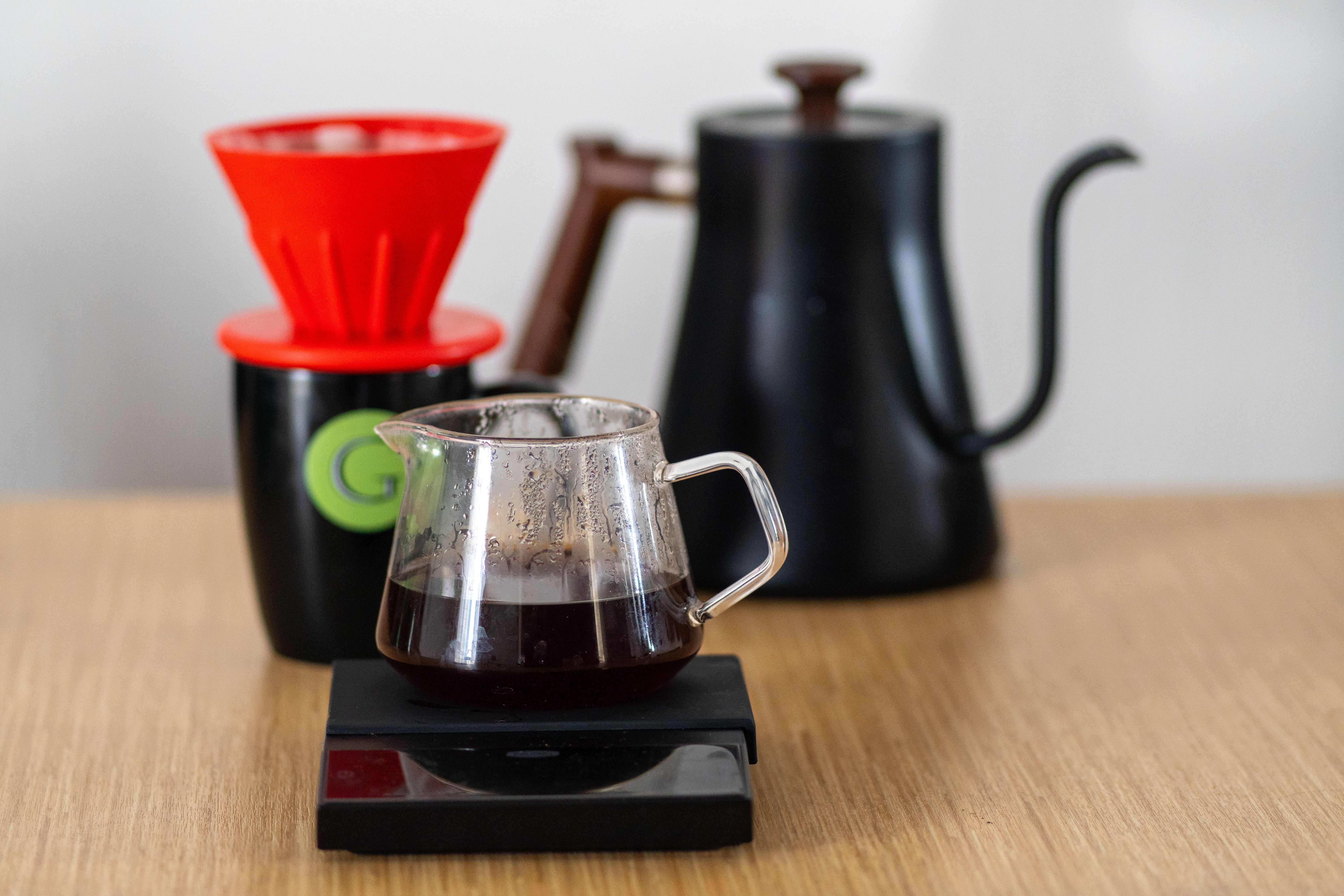
Espresso is often described as concentrated coffee, which suggests it would become filter coffee if you added water. Dilute a shot and the result tastes like neither.
Pressure changes what ends up in the cup
Forcing water through a compacted bed at pressure emulsifies oils that gravity brewing leaves behind in the filter. Those oils carry aroma and contribute a heavy mouthfeel.
Pressure also drives extremely fine particles through the basket and into the drink, where they remain suspended rather than settling.
Filter coffee is a solution with very little suspended material. Espresso is a solution plus an emulsion plus a suspension, and the three behave differently on the palate.
Crema is a physical consequence, not a quality mark
Carbon dioxide dissolved into the liquid under pressure comes out of solution at the spout, forming a foam stabilised by the oils and fines already present.
Because it depends on gas content, crema mostly reports how recently the coffee was roasted. Very fresh coffee produces a thick head regardless of whether the shot tastes good.
Robusta and darker roasts also produce more of it, which is why appearance has never been a dependable guide to what is underneath.
The extraction window is compressed
A shot is finished in well under a minute, so every variable has to be right at the start. There is no time to correct anything once the pump runs.
This is why grind adjustments for espresso are so much finer than for filter. A change too small to see in a pour over shifts a shot substantially.
It also explains why espresso equipment obsesses over consistency of temperature and pressure, since a small drift has nowhere to average out.
The bed does not behave like a filter bed
Compressing grounds into a puck creates a structure that must resist pressure uniformly. Where it fails, water finds a channel and races through.
Channelling produces under-extraction and over-extraction simultaneously, in the same shot, which is a failure mode gravity brewing does not really have.
Preparation of the puck therefore matters more than any other single step, and more than it does in any other method.
Dilution does not undo the difference
Adding hot water to espresso gives a drink with the concentration of filter coffee but the composition of espresso, oils and fines included.
Many people prefer it, and it is a legitimate drink in its own right. It is simply not the same thing as a brew made by percolation through paper.
Understanding the difference stops the common frustration of judging an espresso blend by how it performs in a dripper.
Also by Marcus Obeng
- What we would tell someone starting outEquipment
- When your coffee suddenly gets worseEquipment
- Coffee grounds and wasteEquipment
- Recipe notebooks and dialling in systematicallyWater & Grind