Brewing Methods
Brewing Coffee For A Crowd Without Losing Quality
Scaling a pour over recipe to twelve cups changes the bed depth, the drawdown and the heat loss, which is why big batches usually taste thinner than the same coffee made small.
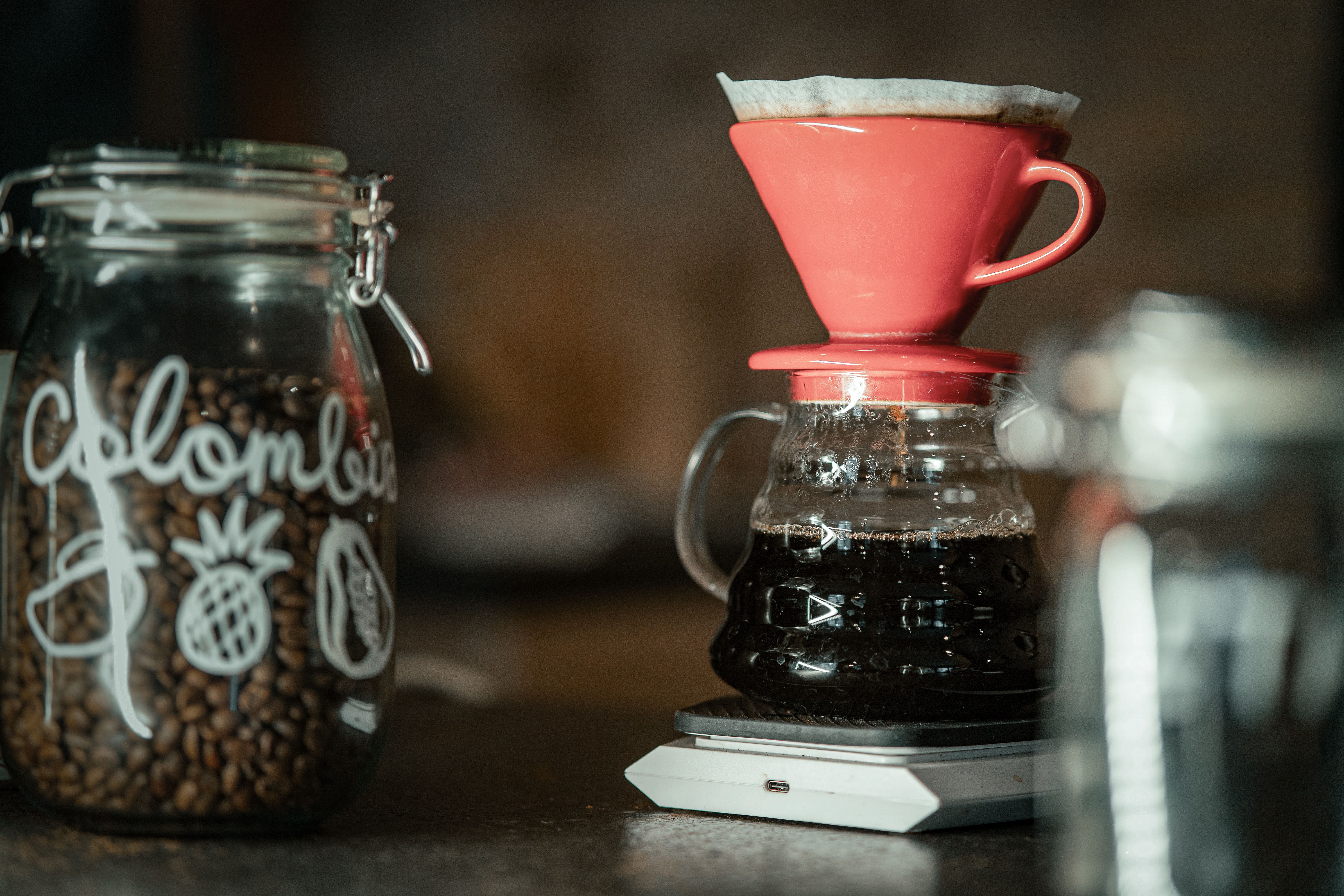
A recipe that produces two excellent cups rarely produces twelve when it is simply multiplied. The variables that stay fixed at small volume start moving as soon as the batch grows.
Bed depth grows faster than surface area
Doubling the dose in the same brewer makes the coffee bed deeper rather than wider. Water then has to travel through more grounds, and the lower layers see water that has already given up much of its solvent power.
The practical result is uneven extraction across the bed. The top is overworked and the bottom is underworked, and the cup tastes both harsh and hollow at once.
Larger brewers exist for this reason. A wide flat basket keeps the bed shallow as the dose climbs, which is why commercial batch brewers look nothing like a single-cup cone.
Heat loss scales differently too
A small brew finishes before the water has time to cool much. A twelve-cup batch runs for several minutes, and the last water through the bed can be noticeably cooler than the first.
Preheating the brewer and the receiving vessel closes part of that gap. So does starting with water slightly hotter than a small-batch recipe would call for, since the loss is real and predictable.
Cold ceramic and a cold carafe pull heat out of the system continuously. Warming them costs a minute and removes a variable that otherwise changes with the temperature of your kitchen.
Grind usually needs to open up
Longer contact time at greater volume means the same grind extracts further than it did in a small brew. The correction is a coarser setting, not a shorter pour.
How much coarser depends on the brewer, but the direction is consistent. If a scaled batch tastes drying and bitter, the grind is the first thing to move.
Working the other way round is a common error. Grinding finer to compensate for a thin large batch usually makes the drawdown slower and the imbalance worse.
Automatic batch brewers solve the pour, not the recipe
A good automatic brewer distributes water across the bed and holds temperature, which removes the two hardest parts of manual scaling. It does not choose your ratio or your grind.
Machines built for home use often brew below the temperature range that suits medium roasts. The symptom is a batch that tastes sour and thin no matter how the grind moves.
Where the machine holds temperature properly, scaling becomes routine. Weigh the dose, weigh the water, adjust grind once, and the same result repeats every time.
Holding the finished coffee is its own problem
Brewed coffee changes within the first half hour, and heat accelerates it. A hotplate keeps the liquid hot by continuing to cook it, which flattens aroma and adds a scorched edge.
An insulated server holds temperature without applying heat, which is why cafes serving batch coffee use them almost universally. The coffee still ages, but far more slowly.
For a gathering, brewing two moderate batches an hour apart beats brewing one large one early. Freshness across the morning matters more than convenience at the start of it.
Also by Marcus Obeng
- What we would tell someone starting outEquipment
- When your coffee suddenly gets worseEquipment
- Coffee grounds and wasteEquipment
- Recipe notebooks and dialling in systematicallyWater & Grind