Brewing Methods
Brew Time Is A Result, Not A Setting
Recipes quote a target time, but no brewer lets you set one directly; the number is an output of grind, dose and pouring that tells you whether they are right.
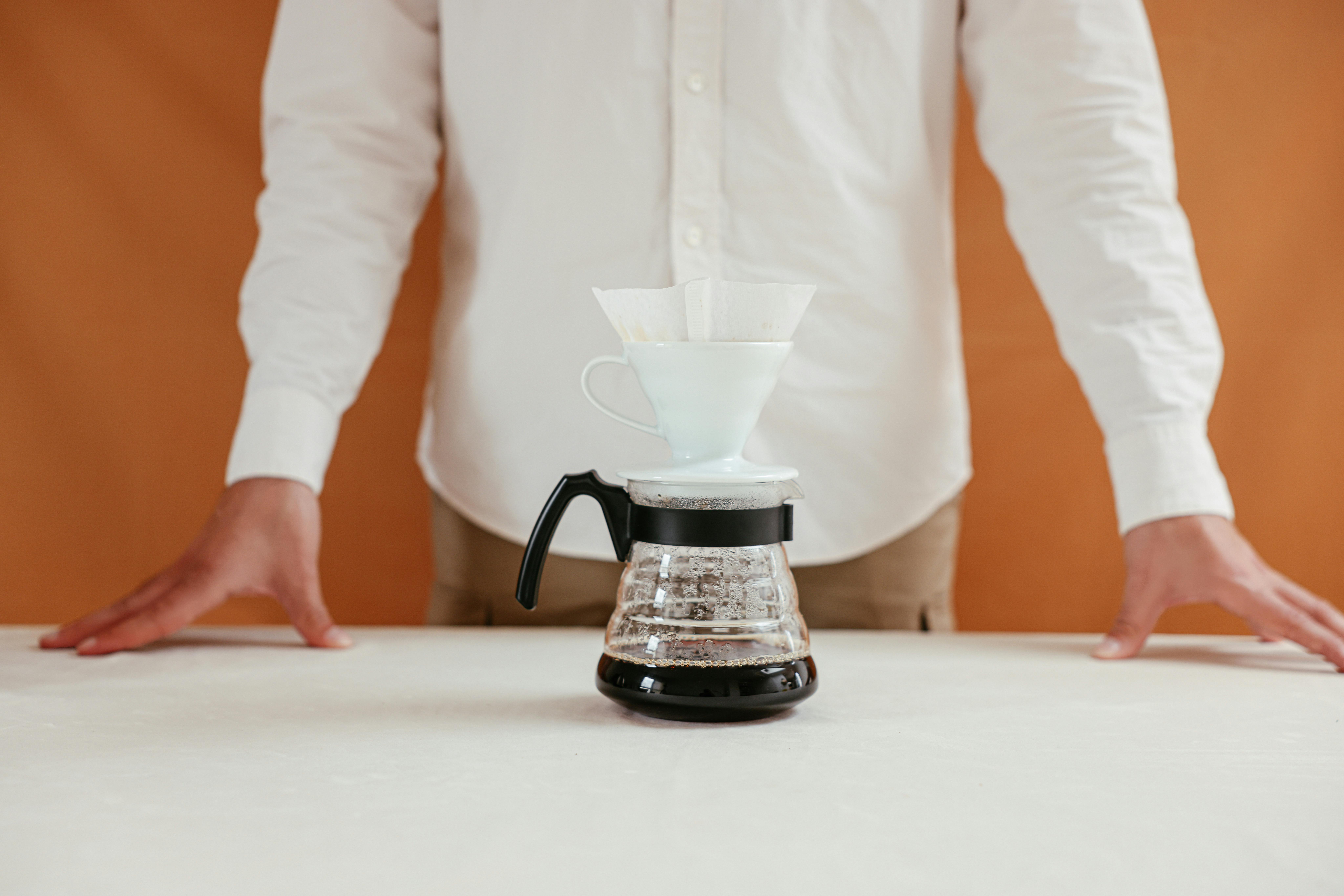
Brewing instructions routinely say to finish in three minutes, as though time were a dial. On every gravity brewer the time is something that happens to you, not something you choose.
Nothing on the device controls duration
You can set the grinder, weigh the dose, choose the filter and decide how to pour. Duration emerges from the interaction of those choices with the geometry of the brewer.
The only real exception is immersion, where you decide when to plunge or decant. Even there, extraction has largely plateaued before the clock becomes decisive.
In percolation, water leaves when the bed lets it leave. That is a physical property of the bed you built.
Time is therefore a diagnostic
A brew that drains far faster than expected is telling you the bed is too permeable, usually because the grind is too coarse or the dose too small for the cone.
A brew that stalls is telling you the opposite, or that fines have migrated and blinded the filter. In both cases the number is evidence rather than a fault in itself.
Treating the reading as information rather than a target is what makes it useful, because the underlying cause is what you actually need to change.
Chasing the number produces bad fixes
If a pour over runs long, the obvious response is to grind coarser. That does shorten the brew, but it also lowers extraction, so a bitter cup becomes a thin one.
The better question is why the brew ran long. A blinded filter, an over-agitated bed and a genuinely fine grind all produce the same reading and need different responses.
Adjusting to hit a stated time without diagnosing the cause is how people end up with recipes that work once and never again.
Contact time and total time are not the same
The clock usually starts at the first drop of water and stops at the last drip into the vessel. Grounds at the top of the bed experience much less contact than that.
Pour schedule changes the distribution of contact even when the total is unchanged. Four small pours and one large pour can share a finish time and taste quite different.
This is why the shape of a recipe matters as much as its endpoints, and why copying only the numbers rarely transfers a result.
What to hold constant instead
Fix the dose, ratio, water and pour pattern, and let time float. Then a change in the reading has exactly one plausible cause, which is the grinder.
Under those conditions the brew time becomes a reliable proxy for grind size, and you can dial in by clock rather than by taste alone.
That is the useful role for the number, and it is a considerably more powerful one than treating it as a rule to obey.
Also by Marcus Obeng
- What we would tell someone starting outEquipment
- When your coffee suddenly gets worseEquipment
- Coffee grounds and wasteEquipment
- Recipe notebooks and dialling in systematicallyWater & Grind